

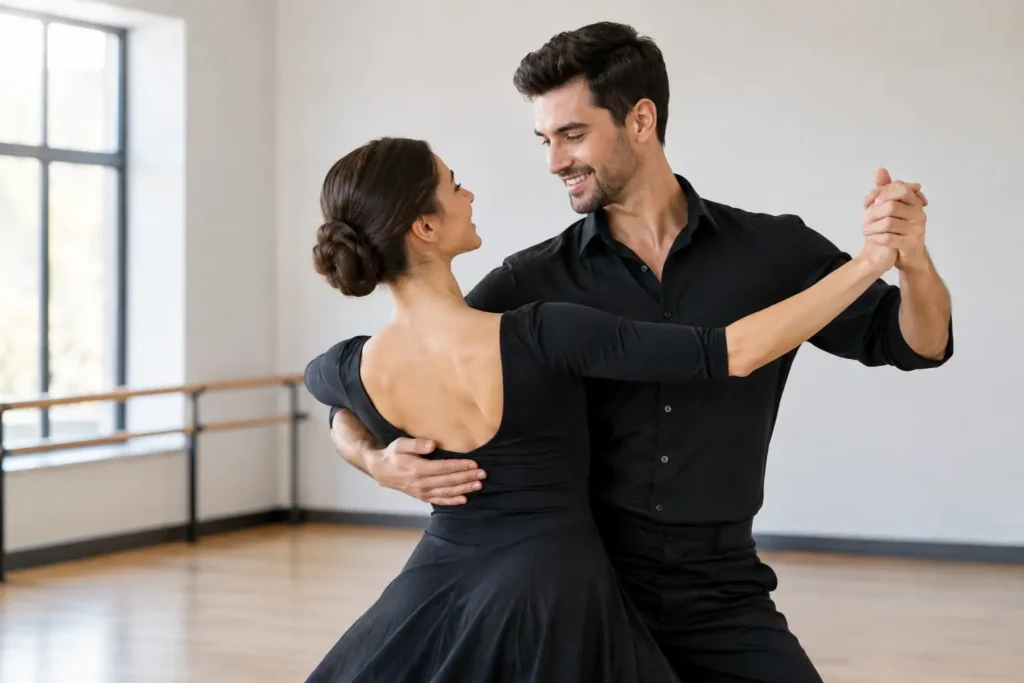
The first time a favorite song comes on at a wedding, party, or night out, couples often face the same question: do we head for the dance floor or stay in our seats? Ballroom dance lessons for couples turn that uncertain moment into something to look forward to. You do not need rhythm, previous experience, or a performance-ready routine. You simply need a willingness to move together, laugh a little, and learn one step at a time.
For many couples, dance lessons become more than a date night. They are a shared skill that builds communication, adds energy to a weekly routine, and gives you a confident answer whenever music starts playing. Whether your goal is a polished first dance, better social dancing, or a hobby you can enjoy for years, a personalized approach makes the experience feel welcoming from the first lesson.
Why Ballroom Dance Lessons for Couples Feel Different
Most hobbies ask you to pursue separate goals in the same room. Partner dancing asks you to pay attention to each other. One person learns to offer a clear lead, the other learns to respond comfortably, and both discover how timing, posture, and connection work together. It is less about memorizing complicated patterns than creating a conversation without words.
That is why couples often notice benefits off the dance floor, too. Learning a new skill together requires patience and good humor. You may need to try a turn several times, switch roles for a moment to understand the movement, or celebrate a small breakthrough that would mean little to anyone else. Those are the moments that make lessons memorable.
There is also a practical side. A few well-taught dances can change how you feel at weddings, charity galas, holiday parties, cruises, and live-music venues. Instead of waiting for a slow song or relying on the same simple sway, you have choices that fit the music and the occasion.
Start With Your Reason for Dancing
The best program begins with your goal, not a one-size-fits-all list of steps. A couple preparing for a wedding may want a first dance that feels natural in photographs and comfortable in front of family. A couple looking for a new activity may want upbeat social dances they can use right away. Experienced dancers may be interested in stronger technique, styling, or competition preparation.
At Arthur Murray Ottawa Dance Studio, certified instructors use a step-by-step teaching model that adapts to the student rather than rushing students through a fixed pace. That matters when one partner feels confident and the other is starting from zero. Good instruction meets both people where they are, so neither person feels left behind or pressured to keep up.
Your first conversation with an instructor is a chance to be specific. Share the kind of music you enjoy, events you hope to attend, any mobility concerns, and how much time you want to devote to lessons. If your wedding is approaching, bring the song if you have chosen one. If it is still months away, that is often even better – you have time to learn comfortably rather than cramming a routine into a few stressful weeks.
The Dances That Give Couples the Most Options
You do not have to learn every ballroom dance to enjoy a full social calendar. Starting with versatile styles creates early wins and gives you a foundation for future dances.
Foxtrot is a favorite for couples who enjoy classic standards, big-band music, and many wedding songs. Its smooth, traveling character can make a crowded floor feel manageable when you learn how to navigate together. Waltz offers a graceful, flowing feel and is especially lovely for formal occasions or romantic music in three-quarter time.
For a livelier mood, swing brings energy to rock, pop, and vintage favorites. Salsa and cha-cha add playful rhythm and are natural choices for Latin music, parties, and vacations. Rumba, often called a dance of romance, gives couples a slower option with expressive movement and clear connection.
The right starting point depends on your life. If you attend formal events, foxtrot and waltz may be most useful. If you love upbeat music and want a casual social outlet, swing or salsa might get you moving faster. Many couples enjoy a mix: one smooth dance, one rhythm dance, and one that matches the music they hear most often.
What a Great First Lesson Actually Looks Like
Beginners sometimes imagine a first lesson filled with intimidating terminology and complicated footwork. In a comfortable studio setting, it should feel much more personal than that. Your instructor will introduce the basics of dance position, timing, and movement while helping you find an easy connection with your partner.
You will likely begin with a few simple patterns that create an immediate sense of progress. The purpose is not to overload you with material. It is to show you that dancing is learnable and that you can move to music together sooner than you think.
Private instruction is especially helpful for couples because feedback is focused on your individual partnership. An instructor can adjust a hand position, explain why a turn feels difficult, or show the leader how to make an invitation clearer. The follower is not expected to guess. Both roles have skills to learn, and both deserve clear coaching.
Group classes and studio practice parties can add another valuable layer once you are ready. They help you practice dancing with music, see how other students handle the floor, and build social confidence in a friendly environment. Private lessons provide precision; group settings provide repetition and real-world comfort. For many couples, the combination is what turns a lesson into a lasting hobby.
How to Make Lessons a Shared Win
The fastest way to drain the fun from dance lessons is to treat them like a test. Nobody needs to be perfect, and progress is rarely identical from one partner to the other. A supportive mindset makes all the difference.
Try to leave corrections to the instructor. It is natural to want to help your partner remember a step, but coaching each other in the moment can create tension. Instead, focus on your own role. Leaders can work on clarity and timing. Followers can focus on maintaining connection and responding without anticipating. When each person owns their part, the partnership improves quickly.
Consistency matters more than marathon practice sessions. A short practice at home can reinforce what you learned, especially if you repeat one or two patterns with the music your instructor recommends. Keep the goal simple: reconnect with the feeling of the dance rather than trying to remember an entire lesson at once.
It also helps to choose a pace that fits your schedule. Weekly lessons are ideal for many beginners, but some couples prefer a more concentrated plan before a wedding or special event. There is a trade-off. Faster programs can build momentum, while a longer timeline gives movements time to become natural. The best choice is the one you can enjoy without turning dance into another obligation.
Beyond the First Dance
Wedding lessons are a wonderful reason to begin, but they do not have to be the finish line. Couples who continue after the wedding often find that the skill becomes more valuable over time. Anniversaries, vacation nights, community events, and spontaneous evenings out all offer reasons to use what you have learned.
Dance can also be a refreshing alternative to the usual dinner-and-a-movie date. You are active, present with each other, and working toward something visible. One week you may finally nail a turn; the next, you may feel comfortable dancing through an entire song without stopping. Those small successes create a powerful reason to return.
For couples who enjoy a challenge, ballroom dancing has room to grow. You can explore new styles, refine technique, join studio events, or pursue competitive hobby dancing at your own level. There is no requirement to perform or compete. The beauty of a structured program is that it can remain purely social or become a deeper passion as your confidence grows.
The most meaningful first step is simply booking a trial lesson and giving yourselves permission to be beginners. Put on comfortable clothing, bring your curiosity, and let the first song be the start of a shared tradition.