

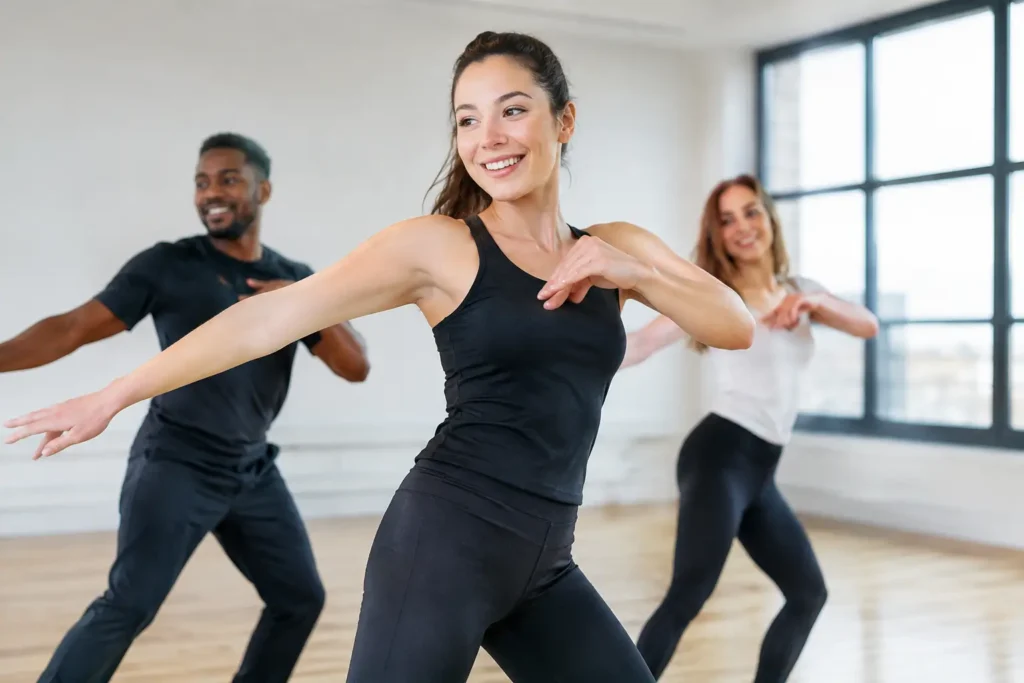
The music starts, the room comes alive, and suddenly the question is not whether you can dance – it is which dance you want to try first. American Rhythm dance classes give beginners and experienced dancers a lively, welcoming way to build confidence, connect with a partner, and enjoy music with more freedom. You do not need a background in dance, a perfect sense of timing, or even a partner to begin.
For many adults, the biggest hurdle is simply walking through the studio door. Maybe you have watched other people dance at weddings or parties and wished you felt that comfortable. Maybe you and your partner want a shared activity that is more memorable than another dinner out. A clear, step-by-step lesson turns that uncertainty into something exciting: a skill you can use, enjoy, and continue building for years.
What Is American Rhythm Dancing?
American Rhythm is one of the two main styles of competitive American ballroom dancing. It includes five energetic dances: cha cha, rumba, East Coast swing, bolero, and mambo. Each has its own personality, but they share a grounded movement quality, expressive rhythm, and strong connection between partners.
You do not have to be a competitive dancer to enjoy this style. In a social setting, these dances help you respond to different kinds of music, from classic swing and Latin favorites to contemporary songs with a clear beat. The goal is not to memorize an endless catalog of patterns. It is to learn how to move comfortably, lead or follow clearly, and have fun with the music.
American Rhythm is different from International Latin, although both include Latin-inspired dances. International Latin has a more prescribed competitive technique and uses a different dance hold in several dances. American Rhythm often feels especially approachable for social dancers because it uses open positions, underarm turns, and a broader variety of partner connections. Neither style is better – the best choice depends on your goals, the music you love, and the experience you want on the dance floor.
The Dances You Will Learn
Cha Cha: Playful and Precise
Cha cha has a crisp, cheerful rhythm that makes it a favorite for parties and social dancing. You will work with a compact basic step, turns, and playful patterns that create a conversation between partners. It is a wonderful choice if you enjoy upbeat music and want to develop quick footwork without feeling rushed.
Rumba: Relaxed, Romantic, and Musical
Rumba is slower than cha cha, giving you time to understand timing, body movement, and connection. It is often a natural fit for couples because it encourages calm movement and a close awareness of your partner. It can also be a valuable dance for wedding couples who want a first dance that feels polished without looking overly choreographed.
East Coast Swing: A Social Dance Floor Essential
East Coast swing brings energy, personality, and plenty of smiles. Its easy-to-recognize rhythm works with a wide range of swing, rock, and popular music. Beginners appreciate that it can be learned in manageable pieces, while more experienced dancers enjoy adding spins, passes, and musical accents over time.
Bolero and Mambo: Expressive and Dynamic
Bolero combines slow, sweeping movement with moments of speed, creating a dramatic and elegant look. Mambo is faster and more rhythm-driven, with a vibrant pulse that challenges dancers to become more precise and musical. These dances may feel more advanced at first, but they become deeply rewarding when learned through progressive instruction.
Why American Rhythm Dance Classes Feel So Rewarding
There is a practical side to partner dancing. You learn where to place your feet, how to recognize counts in music, and how to communicate movement without words. Yet the feeling people remember is often much bigger than the technique. Dancing gives you a reason to be present, laugh at the occasional missed step, and celebrate progress that is visible from one lesson to the next.
For singles, American Rhythm can be a social outlet that does not require arriving with a partner. You can meet people while focusing on a shared activity, rather than making conversation the entire point of the evening. For couples, it offers time together with a purpose. You are not just attending an event – you are learning to coordinate, listen, encourage, and succeed as a team.
It is also a surprisingly effective form of movement. Classes support balance, coordination, posture, mobility, and mental focus. The physical challenge can be adjusted to your current ability, which makes dance an inviting option for adults who want to stay active but do not enjoy conventional workouts.
What Happens in Your First Lesson?
A first lesson should feel encouraging, not intimidating. Your instructor begins by learning about your goals. Are you preparing for a wedding? Looking for a new social hobby? Hoping to feel less awkward at family celebrations? Interested in performing or competing someday? Your answers shape where you begin.
From there, you will be introduced to foundational ideas such as rhythm, posture, connection, and a few simple movements. Rather than trying to teach every dance at once, a certified instructor can focus on the styles that best match your interests. A couple who loves swing music may start with East Coast swing, while someone drawn to slower romantic music may feel more at home with rumba.
Expect to move, make mistakes, and improve quickly. The first goal is not perfection. It is to leave knowing that dancing is something you can learn. When instruction is personalized, lessons can progress at a pace that feels challenging enough to be exciting and comfortable enough to keep you motivated.
How to Get More From Each Class
The dancers who make the steadiest progress are not always the ones with natural rhythm. They are usually the ones who show up consistently and allow themselves to be beginners. Wear clothing that lets you move easily and shoes that stay secure on your feet. You do not need specialized dance shoes for your first lesson, although smooth-soled shoes can make turns easier later on.
Try to listen for the beat in songs outside the studio. Clap along in the car, notice when a chorus repeats, or practice a basic step for a few minutes at home. Short, regular practice helps movements become familiar, especially when you are learning to lead or follow with clarity.
If you are dancing with a partner, resist the urge to correct one another mid-step. Let your instructor guide the technical details. Your role is to stay patient, communicate kindly, and enjoy the shared progress. A dance partnership grows best when both people feel supported.
From First Steps to a Lasting Dance Life
American Rhythm can start as a fun activity and grow into something much more. Social dancers often discover that they look forward to studio parties, themed events, and opportunities to use what they have learned in a relaxed setting. Wedding couples may find that first-dance lessons become a favorite part of their planning, giving them a moment together before the celebration begins.
For dancers who want a bigger challenge, structured training can lead toward showcases, performances, and competitions. That path is optional, not expected. Some people love the spotlight and measurable goals; others simply want to glide onto a dance floor at a party without hesitation. Both are meaningful achievements.
Arthur Murray Ottawa Dance Studio has helped local dancers build those skills and memories for decades through personalized instruction from certified professionals. Whether you come alone, with a partner, or with a special event on the calendar, there is a place to begin.
Your first step does not have to be dramatic. Book a trial lesson, choose a song you enjoy, and give yourself permission to learn something joyful. The dance floor is waiting, and confidence begins one count at a time.