

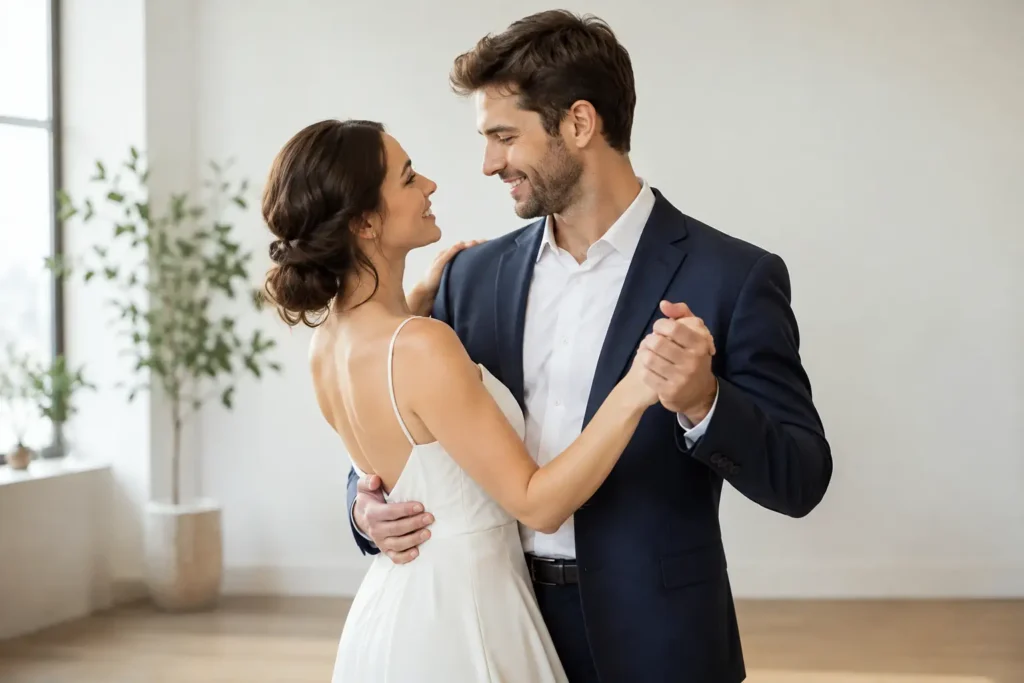
The first few seconds of your wedding dance can feel surprisingly big. The music starts, your guests are watching, and suddenly you are expected to look relaxed while sharing a meaningful moment with your new spouse. If you are searching for how to prepare first dance plans that feel polished but still like you, start here: you do not need to be a natural dancer. You need a realistic plan, a little guidance, and enough practice to enjoy the moment.
A great first dance is not about difficult turns or viral choreography. It is about connection. Whether you picture a romantic slow dance, a lively swing, or a short routine that gets everyone cheering, the best result is one that matches your personalities, your song, and the way you want to feel on the day.
How to Prepare a First Dance Without the Stress
Start sooner than you think you need to. For many couples, three to six months provides a comfortable runway to learn, practice, and make adjustments without turning dance lessons into another wedding deadline. If your wedding is closer, do not panic. A focused plan can still create a beautiful, confident dance in a few weeks, especially when the goal is simple and well chosen.
Your timeline depends on what you want to include. A gentle dance with a few elegant changes of direction may come together quickly. A custom routine with spins, dips, a parent handoff, or a surprise change in music requires more repetition and more time for the movements to feel natural. There is no prize for making the dance harder than it needs to be.
The most helpful first step is to decide what success looks like for the two of you. Do you want to feel comfortable being photographed? Would you love a memorable entrance and a confident finish? Are you hoping to surprise friends with something fun? When you define the experience before choosing the moves, your preparation stays focused.
Choose a Song You Can Actually Dance To
Your first-dance song should mean something to you, but sentiment is only part of the decision. Listen to it with movement in mind. Does it have a steady beat? Does the tempo leave room to breathe? Can you imagine holding each other and moving through it without rushing?
A song can be beautiful and still be challenging to dance to. Very slow music may make it harder to keep moving smoothly, while a song with frequent tempo changes may need a more customized approach. That does not mean you have to give up your favorite song. It simply means your dance should be designed around it rather than forcing a style that does not fit.
You also do not have to dance for the full track. Most first dances feel complete in about two to three minutes. Consider choosing a meaningful section, fading the music at a natural point, or arranging a shorter edit. Your guests will remember the feeling of the dance far more than whether you made it through every verse.
Pick a Style That Fits Your Story
The right style is the one that helps you look and feel comfortable together. A classic slow dance may suit a romantic ballad. A foxtrot creates graceful movement across the floor. A rumba can feel intimate and expressive, while swing or country dancing brings energy and playfulness.
It depends on your song and your comfort level, but it also depends on your wedding setting. A crowded reception room calls for a dance that works in a smaller space. A large ballroom gives you more room to travel. If you are wearing a fitted gown, a long train, or shoes with a higher heel, those details should shape the choreography from the beginning.
Do not worry if you have different experience levels. One partner does not need to become an expert before the other can enjoy dancing. With a personalized teaching approach, couples can learn clear lead-and-follow skills that make the dance feel shared instead of memorized step by step.
Build the Dance Around Three Memorable Moments
A first dance does not need dozens of steps to look complete. In fact, a simple structure often looks more polished because you can perform it with ease. Think in terms of a beginning, a middle, and an ending.
Begin with something calm that lets you settle into the floor and connect with each other. This might be a basic pattern, a gentle turn, or a quiet moment facing one another. In the middle, add one feature that feels special, such as a turn under the arm, a change of position, or a small dip if it is comfortable and safely taught. Finish with a pose, embrace, or clean final turn that gives your photographer and guests a clear ending.
Those three moments create shape without making the dance feel over-rehearsed. They also give you dependable landmarks if nerves make you forget what comes next. Rather than thinking, “What is the next step?” you can think, “We are moving toward our turn,” or “We are setting up our ending.”
Practice for Comfort, Not Perfection
Short, regular practice sessions work better than one long session the night before. Try practicing two or three times a week for 10 to 20 minutes. Repetition helps the movements settle into your body, but it also gives you time to notice practical issues, such as which direction feels best or whether a turn needs more space.
Practice in shoes that are similar in height and feel to your wedding shoes whenever possible. If you will be wearing a dress with volume, bring a long skirt or something with a similar shape to a lesson. You do not need to recreate every wedding detail, but a little preparation prevents surprises.
Film a practice run once in a while. This can feel awkward at first, but it is one of the fastest ways to see what is already working. You may notice that your posture looks lovely, that your smiles appear more natural than expected, or that you need to slow down. Watch with kindness. The goal is not to criticize every detail. It is to build confidence.
Plan for the Real Wedding Day
Your dance floor will not feel exactly like the studio or your living room. There may be a DJ announcement, a circle of guests, a full skirt, unfamiliar lighting, and plenty of emotion. Preparing for these realities is part of feeling at ease.
Ask your venue or DJ about the floor size and where you will enter. Make sure your music edit is confirmed well ahead of time, and designate one person to handle any last-minute questions so you do not have to. If you are planning a dip, dramatic lift, or quick change in music, rehearse it enough that both of you feel completely secure.
Most importantly, give yourselves permission to recover if something goes differently than planned. A missed step is rarely visible to anyone else, especially when you stay connected and keep moving. Guests respond to joy, not technical scoring. A laugh, a squeeze of the hand, and a return to your basic movement can make an unexpected moment feel genuine rather than imperfect.
Get Guidance That Is Built Around You
Online videos can offer inspiration, but they cannot see how your song feels, how your height difference affects a turn, or which movement will work with your attire. An instructor can help you choose a suitable style, create a dance that fits your music, and teach it at a pace that feels encouraging instead of overwhelming.
At Arthur Murray Ottawa Dance Studio, certified instructors work with couples at every starting point, including those who have never danced together before. Your first lesson can be a low-pressure opportunity to talk through your song, wedding date, and vision, then start building the confidence that makes the dance enjoyable.
When the music begins, do not try to perform for everyone in the room. Find your partner, take a breath, and let the dance be a small celebration within a very big day. The steps are there to support the moment, not compete with it.