

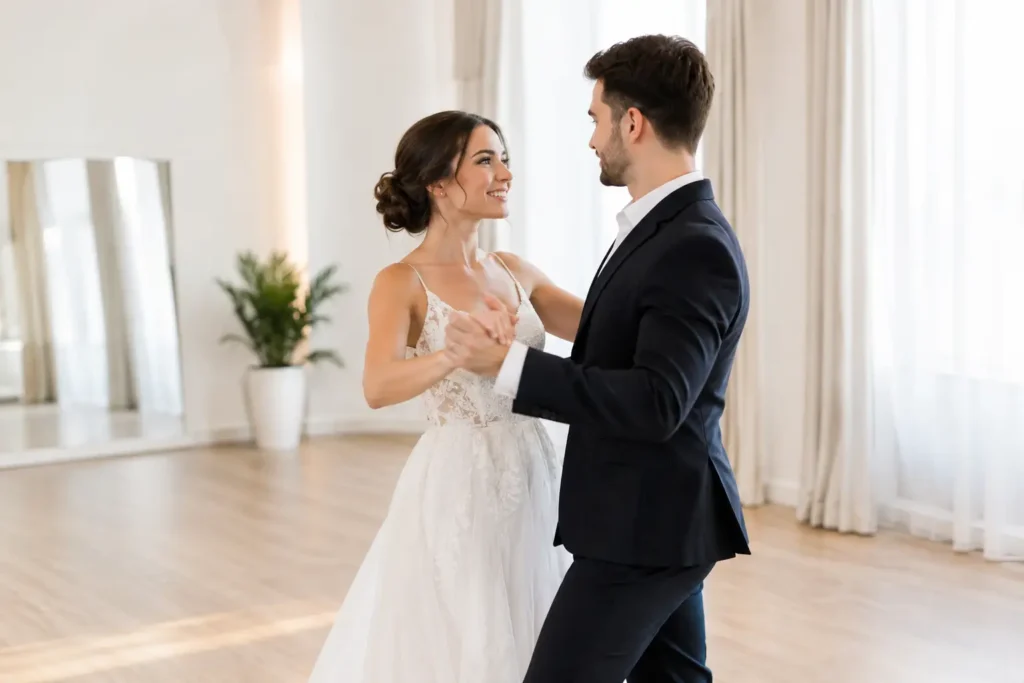
The first dance is often only a few minutes long, but it can become one of the most photographed, remembered moments of your wedding. So, when should wedding lessons start? For most couples, the sweet spot is three to six months before the wedding. That window gives you time to feel comfortable together, learn at your own pace, and make the dance look like you – not like a last-minute performance.
You do not need prior experience, natural rhythm, or a perfectly choreographed routine to create a beautiful first dance. You need a plan that fits your schedule, your song, and the feeling you want to share. Starting early simply gives you more room to enjoy the process.
When Should Wedding Lessons Start?
If your wedding is six months or more away, this is an ideal time to begin. You can build the basics gradually, explore which dances feel best, and shape a first dance that feels relaxed rather than rehearsed. Couples who start early often have more choices with music, choreography, and styling because they are not trying to learn everything in a handful of appointments.
Three to four months out is still a very comfortable timeline for most couples. With consistent lessons, you can learn foundational patterns, develop confidence with timing, and polish the moments that matter most, including your entrance, turns, dips, and final pose.
If your wedding is one to two months away, do not panic. A shorter timeline can still produce a confident, memorable first dance. The key is to focus on quality over complexity. A simple dance with good connection, musical timing, and a few polished highlights will always look better than difficult steps that feel rushed.
Even couples with only a few weeks can benefit from lessons. Your instructor can help you feel more at ease moving together, choose a natural pattern that suits your song, and create a reliable plan for getting through the dance without freezing on the floor. The goal is not perfection. It is to enjoy the moment with your partner.
Why Starting Early Changes the Experience
Wedding planning has a way of filling every available evening. As the date gets closer, there are final fittings, guest questions, vendor meetings, seating charts, and all the little decisions that seemed far away months ago. Beginning your dance lessons before that busy stretch lets the first dance become a welcome break from the planning checklist.
It also gives your body and brain time to learn naturally. Partner dancing is a shared skill. One person learns to lead or initiate movement, the other learns to respond, and both partners learn how to move with the music and each other. That connection becomes easier through repetition, not through cramming.
Early lessons also give you permission to change your mind. You might arrive convinced that you want a dramatic ballroom routine, then discover that a romantic, understated dance fits your personalities better. Or you may choose a song and realize its tempo calls for a different style than you expected. With time on your side, those adjustments are exciting instead of stressful.
Choose a Timeline Based on Your Vision
Not every first dance needs the same preparation. A gentle sway with a few turns has very different needs than a choreographed routine with lifts, multiple song sections, or a surprise upbeat transition.
For a simple, confident first dance
Plan for about four to eight lessons, ideally spread over one to three months. This works well for couples who want to look comfortable, avoid the classic side-to-side sway, and have a few dependable moves that feel natural. You can learn how to start with confidence, move around the floor, handle a turn, and finish in a way that looks intentional in photos.
For a personalized dance with memorable moments
Consider starting three to six months ahead. This gives you enough time to build a dance around your song and personalities. You may want a romantic dip, a playful spin, a change in direction, or a few movements that highlight a meaningful lyric. The best personalized routines do not feel crowded. They give you time to settle into the music and enjoy each other.
For a fully choreographed routine
Start six months ahead whenever possible. Detailed choreography takes more than learning steps. You need time to practice transitions, develop muscle memory, and make the routine feel relaxed enough to perform in formal clothes in front of your favorite people. More ambitious dances may also require extra practice between lessons.
Your Song Matters, But It Does Not Have to Be Final
Many couples wait to begin because they have not chosen their first-dance song. While having a song is helpful, it is not a reason to delay. A certified instructor can begin with the type of feeling you want: romantic and classic, fun and lively, elegant and smooth, or casual and modern.
Once you have your song, lessons can be tailored to its tempo, phrasing, and mood. If you are deciding between two songs, bring both. Sometimes moving to the music makes the choice much clearer than listening to it in the car or debating it over dinner.
A practical detail many couples overlook is song length. A four-minute song may feel perfect on a playlist but surprisingly long when everyone is watching. Your instructor can help you identify a natural section for your dance, so you can enjoy the moment without feeling like you need to fill every second with choreography.
Build Lessons Around Real Wedding Conditions
A first dance that feels great in everyday clothes should also work with your wedding attire, shoes, and venue. This is another reason not to wait until the final week. You want enough time to test the practical details.
If one partner will wear a full gown, a fitted dress, a long veil, or a suit with limited movement, your dance can be designed accordingly. Heels, dress shoes, and slippery floors may affect turns and footwork. A small practice session in similar shoes can make a big difference, especially if you are planning a dip or a more energetic routine.
Think about the size of your dance floor, too. A grand traveling pattern may not be the best choice for a small venue or a crowded room. Great wedding dancing is not about taking the biggest steps. It is about looking connected, comfortable, and present.
Make Practice Feel Like Time Together
Between lessons, short practice sessions are more useful than one long, frustrated rehearsal. Ten or fifteen minutes a few times a week is usually enough to keep the movements familiar. Practice after dinner, before a weekend outing, or whenever you want a reason to put the planning spreadsheets away.
Try not to correct each other constantly at home. Save technical questions for your instructor and use practice time to build familiarity. If you forget a step, keep moving. On the wedding day, your guests will notice your smiles and connection far more than they will notice whether every pattern happened exactly as planned.
At Arthur Murray Ottawa Dance Studio, wedding lessons are designed around your comfort level and your celebration. Whether you are beginning from zero, dancing with a partner for the first time, or hoping to create a show-stopping moment, a step-by-step approach can make the process feel welcoming and fun.
Do Not Let Nerves Set the Schedule
Some couples postpone lessons because they feel embarrassed about being beginners. That is exactly why starting sooner helps. The first lesson is a low-pressure chance to get comfortable, ask questions, and discover that dancing is a learnable skill, not a talent reserved for other people.
You do not need to arrive knowing the terminology. You do not need a dance background. You only need to be willing to take a few steps together. Starting now means your first dance can become one of the rare wedding decisions that brings more laughter, connection, and confidence to the months leading up to the big day.