

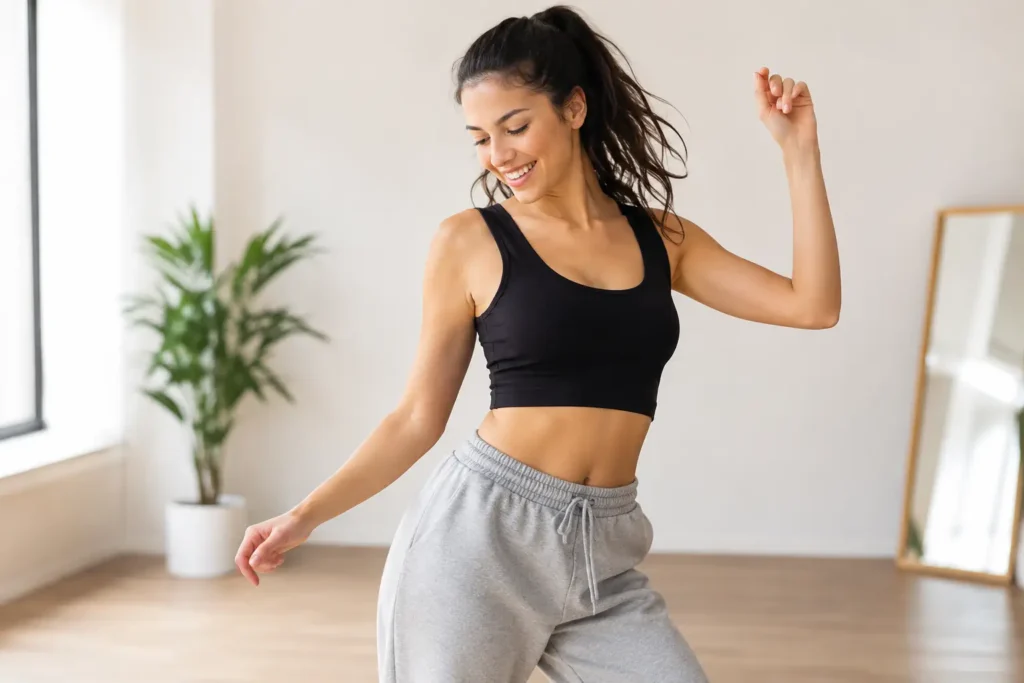
The moment the music starts, many people stop thinking about what they know and start worrying about who is watching. That is exactly why learning how to gain confidence dancing is not just about memorizing more steps. It is about building enough comfort in your body, your timing, and your choices that you can enjoy the song instead of surviving it.
You do not need natural rhythm, a partner, or years of experience to feel better on the dance floor. You need a clear starting point, patient repetition, and a place where mistakes are treated as part of learning. Confidence grows one successful moment at a time: finding the beat, finishing a simple pattern, sharing a laugh, or saying yes to the next dance.
How to Gain Confidence Dancing Without Waiting to Feel Ready
A common mistake is believing confidence has to come first. It does not. Most dancers become confident because they keep dancing while they are still a little nervous.
Start by choosing a small, specific goal for each practice or lesson. Instead of telling yourself, “I want to be a good dancer,” aim to stay on the beat through one full song. Or focus on making your basic step feel relaxed. Small goals give your brain evidence that you are improving, and that evidence is much more convincing than a pep talk.
It also helps to separate learning from performing. In a lesson, you are there to ask questions, repeat a step, and make corrections. At a party or wedding, your goal is different: connect with the music and the person you are dancing with. You do not need to show every step you have learned. A comfortable basic done with a smile often looks better than a difficult move done with tension.
Start with dances that give you quick wins
The best first dance style depends on your goals. If you want to feel at ease at weddings, parties, and social events, a few versatile basics in dances such as swing, salsa, rumba, or foxtrot can go a long way. If country nights are more your scene, country two-step may feel like the practical choice. If you are preparing for a first dance, learning a simple routine tailored to your song can make the entire experience feel more personal and manageable.
There is no single “best” dance for everyone. The right choice is the one you will actually practice and enjoy. A certified instructor can help you select styles that fit the music, events, and goals you have in mind, rather than putting you into a one-size-fits-all plan.
Build Trust in Your Basic Step
When dancers feel unsure, they often rush into fancy turns, complicated patterns, or constant movement. But real social confidence is built on basics. Your basic step is your home base. When you lose your place, you can return to it, catch the beat, and keep going.
Practice your basic step to several songs, not just one. Try slower music first so you can notice your weight changes. Then try a few different tempos. The goal is not to count perfectly forever. The goal is to feel where the rhythm lives in your body.
Keep your knees soft, let your arms stay relaxed, and take smaller steps than you think you need. Large steps make it harder to stay balanced and connected to a partner. Small, controlled movement gives you more time to respond to the music and makes you look calmer, too.
If you are dancing with a partner, focus less on predicting the next move and more on maintaining a comfortable connection. Leaders can give clear, gentle direction rather than pulling. Followers can keep their own balance instead of guessing ahead. Both people are responsible for the dance feeling good.
Practice in Short, Realistic Sessions
You do not need to turn your living room into a ballroom every night. Ten focused minutes a few times a week can make a meaningful difference, especially between lessons.
Put on one song you genuinely enjoy. Spend the first half practicing your basic step. During the second half, add one element you are working on, such as a turn, a change of direction, or smoother timing. Then stop before you become frustrated. Ending a practice session with a feeling of success makes it easier to return tomorrow.
Practicing alone is valuable, even for partner dance. You can work on posture, rhythm, foot placement, and transitions without worrying about anyone else. If you have a partner, keep practice light and kind. Agree on one point of focus rather than correcting every detail. Too much feedback can make either person feel self-conscious, while one useful adjustment can create a real breakthrough.
Learn to Recover When Something Goes Wrong
Experienced dancers are not confident because they never make mistakes. They are confident because they know a missed step is not the end of the dance.
If you lose the pattern, return to your basic. If you miss the beat, simplify your movement until you find it again. If you bump into another couple, apologize briefly, reset, and continue. These moments happen to everyone, including advanced dancers in busy social settings.
The people around you are usually far less critical than you imagine. Most are focused on their own feet, their own partner, or the fun they are having. A relaxed response to a mistake often makes you appear more confident than trying to hide it.
A helpful phrase to remember is: keep moving, keep smiling, keep listening. It gives you a simple response when your mind goes blank.
Get Comfortable Being Seen, One Dance at a Time
For many adults, the hardest part is not the footwork. It is the feeling of being visible. This is especially true for singles arriving at a new social event, couples who have not danced together before, and engaged couples imagining every eye on their first dance.
Build exposure gradually. Dance in a lesson first. Then try a studio practice party where the atmosphere is designed for learning. Next, dance with different partners or invite a friend to join you at a social event. Each new setting teaches you that you can handle a little more than you thought.
Social dancing is also one of the fastest ways to improve because it gives you variety. Different partners, songs, and floor conditions make you more adaptable. At first, that variety can feel uncomfortable. Over time, it becomes the reason you can walk into a wedding reception or local dance night and feel ready for whatever song comes on.
At Arthur Murray Ottawa Dance Studio, students build that comfort through personalized, step-by-step instruction and welcoming social opportunities. No partner is needed, and lessons can move at the pace that makes sense for you.
Replace Comparison With Connection
Watching an advanced dancer can be inspiring, but comparison can quickly drain the joy from your progress. Someone who looks effortless may have spent years refining skills you are only beginning to explore. Their path does not make yours less worthwhile.
Instead, notice what has changed since your first lesson or first practice. Maybe you can hear the beat more easily. Maybe you no longer freeze when your partner turns you. Maybe you are willing to dance through an entire song rather than stepping off halfway through. Those are real wins.
Connection is a better measure than perfection. Did you enjoy the music? Did your partner feel comfortable? Did you try something new? A dance can be simple and still be memorable because it felt relaxed, warm, and shared.
Give Yourself a Reason to Dance
Confidence grows faster when dancing has a purpose beyond “getting better.” Perhaps you want to feel prepared for a wedding, surprise your partner on a date night, meet new people, stay active, or finally enjoy the songs that make you want to move. Let that reason guide your choices.
For wedding couples, this may mean practicing an entrance, a first dance, or simply how to hold each other with ease in front of family and friends. For social dancers, it may mean learning enough to accept an invitation without panic. For competitive hobby dancers, it may mean refining technique while celebrating the discipline it takes to improve.
The goal can change as you grow. What begins as a wish to avoid feeling awkward can become a favorite weekly activity, a stronger connection with a partner, or a community that cheers for your progress.
The next time a song begins, do not wait for perfect confidence to appear. Take the basic step, listen for the beat, and give yourself permission to enjoy the next few counts. That is how confidence begins: not with a flawless performance, but with the decision to dance.