

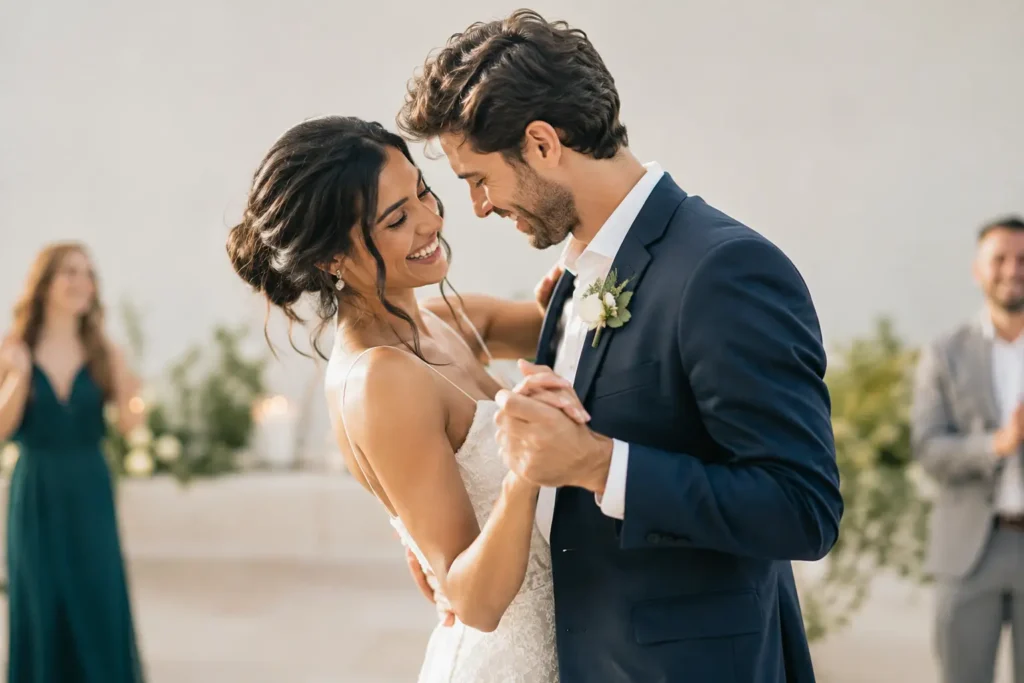
The first notes of your song begin, your guests grow quiet, and suddenly the dance floor feels much bigger than it did during venue tours. Wedding dances do not need to be complicated to be memorable. The moments people remember are the ones that feel genuinely yours: a relaxed smile, a shared laugh, a turn that lands beautifully, or simply the confidence to hold each other close and enjoy the music.
For some couples, that means a polished ballroom-inspired routine. For others, it means learning enough to stop swaying in a small circle and start moving with ease. There is no single right way to create a first dance. The best choice is the one that suits your song, your personality, your comfort level, and the kind of celebration you want to share.
Start With the Feeling You Want to Create
Before choosing steps, decide what you want your first dance to feel like. Do you picture something romantic and elegant? Lighthearted and playful? Smooth and modern? Your vision gives the dance direction long before you need to think about choreography.
A slow, emotional song may suit a rumba-inspired approach, a simple foxtrot, or a graceful waltz. A soulful mid-tempo track can work beautifully with nightclub two step or a relaxed swing influence. If your favorite song has a strong beat and plenty of personality, a few upbeat Latin or social dance elements can make the floor feel alive without turning the dance into a production.
The original version of a song is not always the easiest one to dance to. Sometimes a live, acoustic, or shortened edit gives you a clearer rhythm and a more comfortable length. You do not have to use the entire song, either. Two to three minutes is often plenty of time for a meaningful first dance while keeping your guests engaged.
Wedding Dances Work Best When They Fit Your Timeline
The calendar matters, but it should not cause panic. Couples can make real progress in a few lessons, especially when the goal is comfort, connection, and a few reliable patterns. More time gives you room to refine technique, build a custom routine, practice transitions, and make the movement feel natural rather than memorized.
If Your Wedding Is Several Months Away
This is the ideal window for couples who want a more personalized experience. You can explore different styles, test your song choice, and build a dance in stages. Early lessons also leave room for the realities of wedding planning. If a busy month interrupts your practice schedule, you still have time to regain momentum without stress.
If Your Wedding Is Only Weeks Away
Keep the objective focused. A strong wedding dance does not require dozens of steps. A comfortable entrance, a simple pattern that travels, a gentle turn, and a confident ending can create a polished result. Repetition is your friend here. Learning fewer figures well is far more effective than rushing through a complicated routine that never has time to settle in.
If You Are Planning at the Last Minute
You are not out of options. Even one focused lesson can help you understand timing, posture, how to lead and follow, and what to do when the music starts. The goal becomes less about choreography and more about looking comfortable together. That is a very worthwhile goal.
Choose a Dance That Suits Both Partners
A wedding dance is a shared experience, not an audition for the more coordinated partner. One person may love the idea of spins and dips while the other is worried about remembering the first step. A certified instructor can adapt the plan to both people, breaking skills into manageable pieces and building from what already feels comfortable.
Height differences, long dresses, fitted suits, heels, boots, and limited dance experience all influence what will feel good on the floor. A dramatic dip may look wonderful in a rehearsal studio but feel awkward in formalwear. Fast footwork can be exciting, but it may not be practical on a crowded dance floor or beneath a heavy gown. Good instruction accounts for those details rather than treating every couple and every song the same way.
It also helps to be honest about practice. If you know your schedule will be packed with vendors, travel, and last-minute tasks, choose a dance that can be retained with a few short practice sessions at home. A routine should support the joy of the day, not become another wedding task hanging over your head.
Make Your First Dance Look More Natural
Most couples are surprised by how much of a polished look comes from a few fundamentals. You do not need perfect technique. You need clear timing, an easy connection, and enough confidence to keep moving if something does not go exactly as planned.
Start by learning to hear the count in your music. Once you can recognize the rhythm, you will be less dependent on memorizing every beat. Next, practice moving together with small, comfortable steps. Couples often make the mistake of taking steps that are too large when they are nervous. Smaller steps give you better balance and make your movement look smoother.
Keep your focus on each other instead of staring down at your feet. You may glance down while learning, but your finished dance should feel connected. Eye contact, a smile, and a moment to breathe together will make a greater impression than a long sequence of difficult patterns.
Finally, practice your recovery. Every experienced dancer occasionally loses a count or steps on a toe. The difference is that they know how to continue. Pick one familiar basic step that you can return to whenever you feel uncertain. It becomes your reset button, and your guests will likely never notice the detour.
Think Beyond the First Dance
Your reception may include more than one special moment. Parent dances, wedding party entrances, and an open-floor celebration all benefit when people feel at ease with music and movement. You might want a simple father-daughter or mother-son dance that feels comfortable and heartfelt, especially if a family member has never taken a dance lesson before.
Wedding party lessons can also be a fun pre-wedding activity. They are useful if your group is preparing an entrance or a coordinated surprise, but they do not have to involve choreography. A social dance lesson gives friends and family a chance to relax, laugh, and feel more prepared to join the party once the formal dances are over.
At Arthur Murray Ottawa Dance Studio, wedding instruction is designed around your goals, your music, and your experience level. Whether you want a few dependable moves or a fully personalized first dance, lessons can be paced so both partners feel supported from the first count to the final pose.
What to Bring to Your First Lesson
Bring your song, or a few possible songs if you have not decided yet. Wear shoes that are secure and reasonably close to what you expect to wear at the reception. You do not need to practice in wedding shoes immediately, but it is helpful to understand the heel height, sole, and support you will have on the day.
Come ready to share what worries you, too. Maybe one of you has no rhythm. Maybe you are concerned about being watched. Maybe you have seen elaborate first-dance videos and now feel pressure to do something equally big. A good first lesson creates a clear, realistic plan and replaces those worries with a place to begin.
Give Yourselves Permission to Enjoy It
The most moving wedding dances are not always the flashiest ones. They are the dances where two people look present with each other, even when the steps are simple. Your guests are not waiting to judge your footwork. They are there to celebrate the life you are beginning together.
Book your first dance lesson early if you can, then let the process become one of the more enjoyable parts of planning. A little guidance, a little practice, and a song that means something to you can turn those first moments on the floor into a memory you will be happy to revisit for years.