

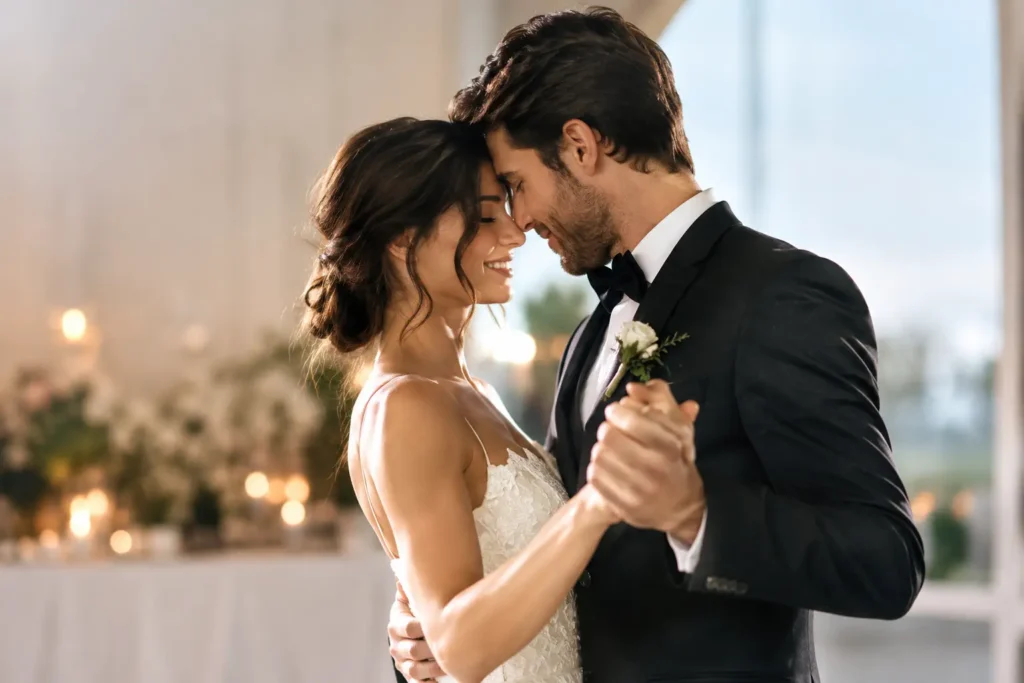
The moment the room quiets, the lights soften, and you step onto the floor together is not the time to wonder whether you picked the right music. The best romantic first dance songs do more than sound beautiful in a playlist. They create a feeling that is unmistakably yours, give you a natural rhythm to move to, and help you stay present with each other instead of counting every step.
That is why the most popular song is not always the best choice. A meaningful song with a comfortable tempo can feel far more memorable than a dramatic ballad that leaves you feeling rushed, stiff, or nervous. Your first dance should look and feel like a celebration, whether you picture a classic ballroom sway, a polished waltz, or relaxed movement that lets your personalities shine.
How to Choose Romantic First Dance Songs
Start with the story you want the song to tell. Perhaps it was playing on your first date, it reminds you of a trip you took together, or its message captures the commitment you are making. Personal connection matters, but it is only one part of the decision. Listen for a steady beat, a tempo that feels manageable, and a musical style that fits the atmosphere of your wedding.
A slow song is not automatically easier to dance to. Some slow ballads have uneven phrasing, long pauses, or a vocal style that makes it difficult to find the beat. In contrast, a slightly more upbeat song with a clear rhythm can be wonderfully comfortable for beginners. If you can naturally sway, walk, or clap along without losing the timing, it is a promising option.
Also consider song length. Three minutes can feel surprisingly long when every guest is watching. Many couples choose to dance for about 90 seconds to two minutes, then fade the music or invite their wedding party and guests onto the floor. This keeps the moment special while allowing you to enjoy the reception sooner. If there is a favorite verse, chorus, or musical section, an edited version can preserve the emotion without asking you to perform for the entire track.
Romantic First Dance Songs by Feel
Timeless and elegant
For couples planning a formal evening or simply drawn to old-school romance, classics bring instant warmth to the room. At Last by Etta James has a luxurious, unhurried feel that suits a romantic sway, slow foxtrot-inspired movement, or simple turns. The Way You Look Tonight by Frank Sinatra feels joyful and polished, especially for a couple who wants a little more energy without moving into a fast routine.
Can’t Help Falling in Love by Elvis Presley remains a favorite for good reason. Its gentle pace leaves room for eye contact and small, meaningful movements. A modern cover can work just as well if it better fits your wedding style, but test the tempo before you commit. Covers often change the speed and rhythm dramatically.
Warm, modern, and personal
Contemporary love songs can feel more reflective of your relationship, particularly if you want the dance to feel relaxed rather than formal. Best Part by Daniel Caesar featuring H.E.R. has a soulful, intimate quality that works well for couples who want close, grounded movement. Beyond by Leon Bridges offers vintage-inspired warmth with a clear groove and a deeply romantic message.
Better Together by Jack Johnson is an easygoing choice for a casual celebration, outdoor wedding, or couple who wants their first dance to feel natural and unfussy. You Are the Best Thing by Ray LaMontagne brings more energy and can be a wonderful choice for a lively couple, though its upbeat feel may call for a few more rehearsed transitions.
Big emotion without a complicated routine
Some songs deliver a cinematic feeling while still giving beginners a workable structure. Perfect by Ed Sheeran is familiar to many guests and has an easy, steady pulse for a romantic slow dance. Say You Won’t Let Go by James Arthur offers a clear storytelling quality that can make the dance feel personal, especially when the lyrics mirror your journey together.
If you love a song with a powerful build, be intentional about how you use it. A dramatic chorus is a wonderful place for a turn, dip, or gentle change of direction, but it does not require a difficult lift or elaborate choreography. One well-timed moment you can perform confidently will look much better than several ambitious moves that make you forget to enjoy each other.
Match the Song to the Dance You Want
You do not need to decide on a dance style before you choose your song, and you do not need prior dance experience to create a beautiful first dance. Still, the music will guide the movement. A song in three-quarter time often suits a waltz, with its flowing, rotating character. Songs with a smooth four-count rhythm can work beautifully for rumba, foxtrot, or a simple social slow dance.
For many couples, the best approach is to choose the song you genuinely love first, then build movement around it. An experienced instructor can identify the rhythm, help you hear the musical phrases, and shape steps around your comfort level. The goal is not to force your favorite song into a complicated style. It is to create a dance that feels natural in your bodies and looks connected from the outside.
Your venue matters, too. A grand ballroom may invite bigger traveling steps and turns, while a crowded restaurant space may call for a compact dance that stays mostly in one area. Think about your attire as well. A fitted gown, a long train, a narrow aisle, or heels you rarely wear can affect what feels comfortable. These details are not limitations. They simply help you make smart choices early.
Give Your Song Room to Breathe
A first dance does not need nonstop choreography. In fact, the most romantic moments are often the quiet ones: a pause to look at each other, a relaxed walk into hold, or a simple turn that lands right on the music. Leave space for those moments rather than filling every count with steps.
Choose two or three highlight points in the song. You might begin with an easy entrance, add one turn during the first chorus, and finish with a gentle dip or pose. That gives your dance a clear shape without turning it into a high-pressure production. If you are comfortable and confident, you can add more. If you are short on time, a well-practiced foundation is more than enough.
When editing the song, avoid cutting in the middle of a lyric or a musical phrase. Your DJ or band can usually create a smooth fade, but it helps to decide your ending before the wedding day. Practice the exact version you will use so the final pose does not arrive as a surprise.
Practice for Connection, Not Perfection
The couples who look most at ease are rarely the ones trying to memorize the most steps. They are the ones who have practiced enough to stop thinking about their feet. Start early if you can, especially if you want choreography, a waltz, or a dance that includes transitions. Even a few focused lessons can help you establish posture, timing, and a lead-and-follow connection that makes movement feel less like memorization.
Practice in shoes similar to what you will wear at the wedding, and rehearse in a space that is not much larger than your dance floor. Try one run-through after a long day or when you are slightly distracted. If you can stay connected then, you will feel much more prepared when the big moment arrives.
Most of all, give yourselves permission to smile, laugh, and recover if something goes differently than planned. Guests remember the feeling in the room, not whether every turn was technically perfect.
A song you both love is the best place to begin. When you are ready to turn it into a first dance that feels comfortable, personal, and joyful, a wedding dance consultation at Arthur Murray Ottawa Dance Studio can help you take that first step with confidence.