

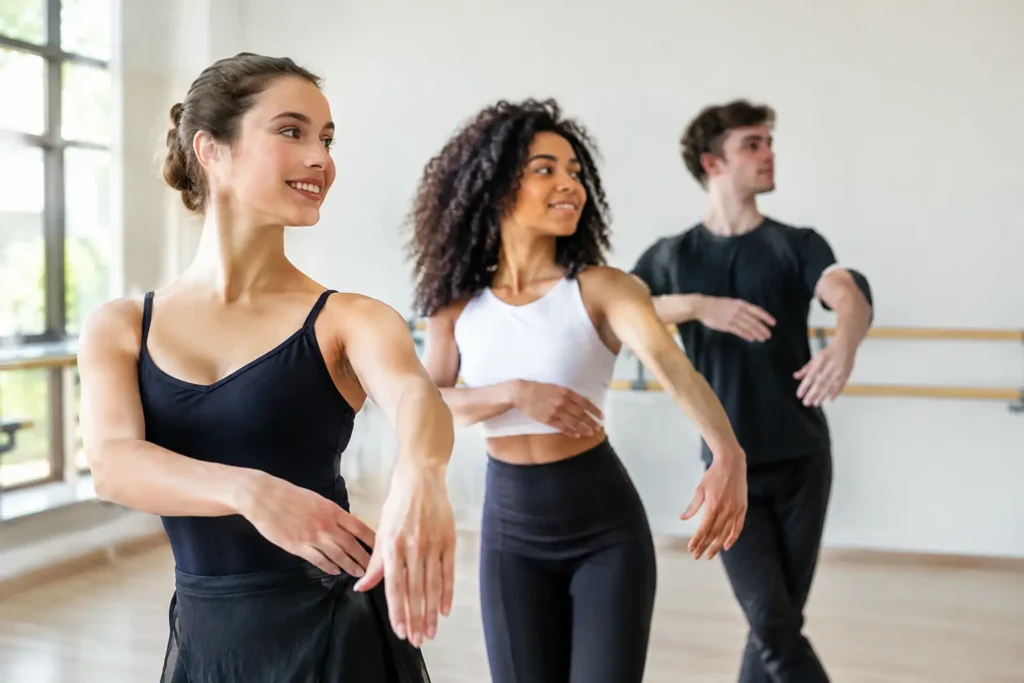
A great dance lesson should leave you feeling taller when you walk out than when you walked in. Maybe you want to feel comfortable at weddings, surprise your partner with a date-night hobby, prepare for your own first dance, or finally stop sitting out when the music starts. Knowing how to choose dance lessons begins with that feeling: find a place where your goal is understood and your first step feels possible.
The right program is not necessarily the one with the flashiest choreography or the longest class schedule. It is the one that gives you clear instruction, a welcoming environment, and a path you can genuinely enjoy following. Whether you are arriving solo or with a partner, you do not need experience to start dancing well.
Start With the Reason You Want to Dance
Your reason for taking lessons should shape the type of instruction you choose. A couple planning a wedding has different needs than someone who wants to feel at ease at parties, and a dancer with competition goals needs a different level of technical preparation than a beginner looking for a fun weekly activity.
Be specific about the moments you want dance to improve. If you want confidence at social events, lessons in popular partner dances and practical lead-and-follow skills may be your best fit. If your wedding is approaching, look for a program that can build a first dance around your song, timeline, attire, and comfort level. If you are seeking a new community and a lively way to stay active, ask about social dance events in addition to instruction.
There is no wrong goal. The key is choosing a studio that treats your goal as the starting point, rather than placing every student into the same routine.
How to Choose Dance Lessons for Your Experience Level
Many adults delay their first lesson because they think they need rhythm, flexibility, a partner, or some natural talent before they arrive. You do not. A beginner-friendly dance program should make the entry point clear, comfortable, and free of judgment.
Ask how a studio introduces new students. In a strong first lesson, an instructor will learn about your goals, show you fundamentals at a manageable pace, and help you experience an early success. You should not feel rushed through unfamiliar steps or left trying to copy a crowded room from the back.
Private instruction can be especially helpful for beginners, nervous dancers, and couples with a specific event in mind. It gives you focused attention and allows the teacher to adjust the material as you improve. Group classes bring a different benefit: they help you practice with a range of people, learn social-floor awareness, and enjoy the energy of a shared activity. For many students, the best experience includes both.
If you have danced before, do not assume you must start from scratch or jump straight into advanced material. A thoughtful instructor can assess where you are, strengthen gaps in your foundation, and recommend a program that challenges you without making dance feel like homework.
Look for Teaching, Not Just Steps
Anyone can show a pattern. A qualified instructor explains why it works, helps you build balance and timing, and gives you tools to dance with more than one partner or to different songs. That difference matters the first time you leave the studio and try your new skills at a wedding, party, club, or community event.
When comparing studios, ask about instructor training and teaching standards. Certified instructors and a structured curriculum can provide consistency, especially when your goals include polished social dancing, wedding preparation, or competitive performance. A step-by-step approach should still feel personal. You want a plan, not a script that ignores your pace.
Pay attention to how the instructor communicates during your introductory lesson. Are directions easy to understand? Do corrections feel encouraging and useful? Are you learning the connection, posture, timing, and confidence behind the movement? The right teacher meets you where you are while helping you see where you can go.
Choose Styles That Fit Your Life
You do not need to decide that you are “a salsa person” or “a ballroom person” before your first lesson. Your initial goal may point you toward a few useful styles, and a knowledgeable instructor can help you explore from there.
For wedding guests and social dancers, versatile dances such as swing, salsa, foxtrot, rumba, and country western can make many occasions more fun. Couples preparing for a first dance may choose a style that suits their song and personality, whether that means romantic and classic, upbeat and playful, or simple and elegant. Dancers who enjoy faster music, expressive movement, or a technical challenge may be drawn to Latin, ballroom, club, Caribbean, or competitive styles.
Practicality matters, too. Consider the music and events you actually attend. The best dance to learn first is often the one you will have a chance to use. Once you gain confidence in one or two styles, learning the next becomes much easier.
Consider the Studio Atmosphere
Technique matters, but so does the room where you learn it. Dance asks people to try something new in front of others, often while holding hands, moving to music, and making mistakes along the way. A welcoming culture makes that process enjoyable.
Visit the studio or book a trial lesson before committing to a longer program. Notice whether staff members greet you warmly, whether the space feels organized and comfortable, and whether students seem supported rather than intimidated. A good studio welcomes singles and couples alike. You should never feel that arriving without a partner puts you on the sidelines.
Also ask what happens beyond lessons. Practice parties, showcases, social events, and friendly opportunities to perform can turn dance from an appointment on your calendar into a rewarding part of your life. They give you a reason to use what you learn and celebrate progress along the way.
Make Sure the Schedule Supports Progress
Consistency builds confidence. One lesson can be exciting, but regular practice is what helps a turn, rhythm, or lead feel natural when the music changes. Choose a lesson format and frequency that work with your real schedule, not an idealized version of it.
Ask how appointments are scheduled, how far in advance you can book, and what options exist if work, travel, or family plans change. If you are preparing for a wedding, discuss your date early so your lessons can be paced properly. Starting several months ahead gives you more room to learn comfortably, practice together, and enjoy the process instead of counting down in a panic.
Budget deserves the same honest consideration. Ask what is included in the program, whether it combines private lessons, group classes, and practice opportunities, and how the studio recommends progressing. The least expensive option is not always the best value if it offers little feedback or no structure. At the same time, the right program should feel clear and manageable, never pressured.
Ask Questions Before You Commit
A conversation with the studio should give you confidence, not more uncertainty. Come prepared to ask how lessons are personalized, whether you need a partner, what styles are recommended for your goals, and how quickly you can expect to feel comfortable on the dance floor.
If you are a couple, ask whether both partners can learn at their own pace. If one person is more enthusiastic or experienced, a skilled teacher will keep both people engaged. If you are coming alone, ask how the studio supports solo students and social practice. If you are interested in competition, ask about coaching, performance opportunities, and the progression from social dancing to more advanced training.
A studio that listens carefully before recommending a program is showing you something valuable: your experience matters.
Give Yourself Permission to Start Simply
Your first dance lesson does not need to decide your entire future as a dancer. It only needs to answer a few meaningful questions. Do you enjoy the instruction? Do you feel comfortable in the studio? Can you picture yourself becoming more confident here?
At Arthur Murray Ottawa Dance Studio, students have been learning in the region since 1952 through personalized instruction designed for real goals and real people. That may mean a polished wedding dance, a new shared hobby, stronger social confidence, or a competitive challenge worth working toward.
Choose the place that makes you want to come back next week. The music, the movement, and the confidence you are looking for all begin with one comfortable first lesson.