

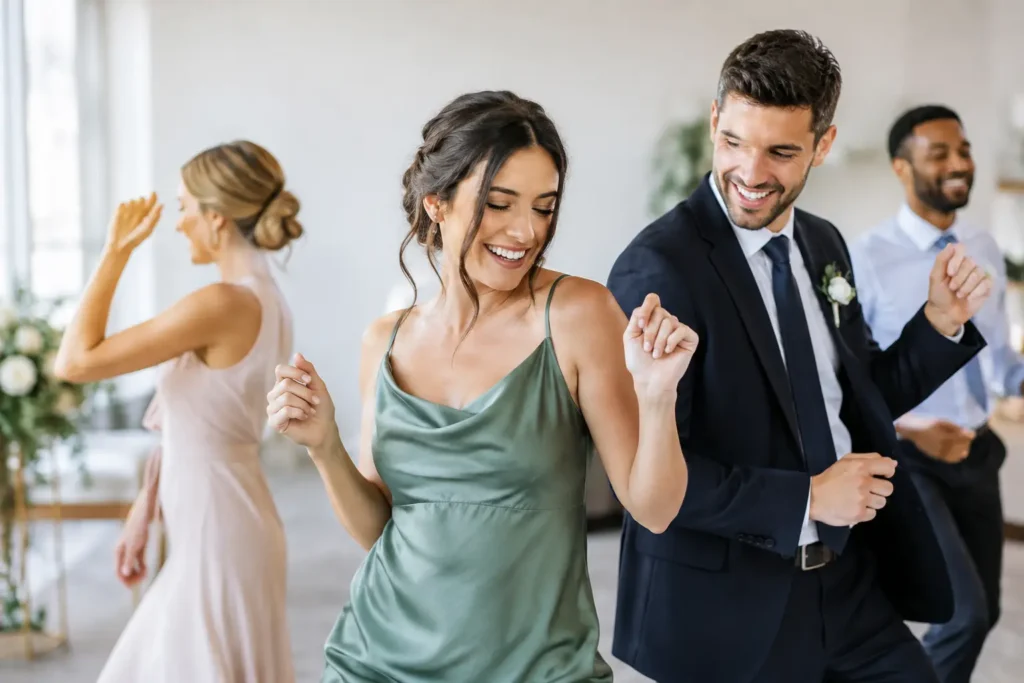
The dance floor is filling up, the music gets louder, and suddenly the question is not whether you want to join in – it is whether you know how to dance at weddings without feeling awkward. The good news is that wedding dancing is not an audition. It is a shared celebration, and the people having the most fun are rarely the ones performing the most complicated steps.
Whether you are attending as a guest, standing beside the couple in the wedding party, or preparing for your own first dance, confidence starts with having a few simple options. You do not need a partner, formal training, or natural rhythm to look comfortable. You simply need to move with the music, respect the space around you, and let yourself enjoy the moment.
How to Dance at Weddings: Start Simple
The best first move is often the smallest one. Stand with your feet about hip-width apart, soften your knees, and shift your weight from one foot to the other in time with the beat. This side-to-side step works for almost every upbeat song and gives you a steady foundation when you are not sure what else to do.
Do not try to fill every beat with a new movement. Let your shoulders and arms move naturally, keep your hands relaxed, and focus on the music rather than on how you look. A simple step done comfortably looks far better than a complicated move done with visible panic.
If the song is slower, use a gentle sway. Step slightly to one side, bring your other foot in, and repeat. If you are dancing with someone, hold one hand or use a light closed position with one partner’s hand on the other person’s shoulder or upper arm area. There is no need to spin, dip, or travel across the floor unless both of you genuinely know what you are doing.
A useful rule for beginners is to match your movement to the energy of the song. A lively pop, country, Latin, or rock song can handle a bouncy side step. A romantic ballad calls for smaller, smoother steps. When the music changes, you can change with it without needing to know the name of a single dance style.
Three easy moves that work almost anywhere
Once your basic step feels comfortable, add one small variation at a time. Try stepping side to side for four counts, then stepping forward and back for four counts. You can also make a gentle quarter turn, then continue your side-to-side rhythm while facing a new direction.
For upbeat songs, add a small clap on the beat or lift your hands briefly with the chorus. For slower music, keep your steps compact and let the sway do the work. The goal is not to invent choreography. It is to look relaxed enough that your friends and family feel invited to join you.
If you lose the beat, stop moving your feet for a moment and listen to the drums or bass line. Start again by stepping when you hear the strongest pulse. Everyone gets off time now and then, including experienced dancers. Recovering calmly is part of becoming a confident social dancer.
Dancing With a Partner Without Overthinking It
Partner dancing at a wedding is about connection, not control. If you ask someone to dance, offer a warm invitation and accept their answer graciously. If they say yes, begin with an easy hold and a basic rhythm rather than attempting a move you saw online once.
A comfortable closed position is enough for many slow songs. One partner can place a hand lightly on the other person’s shoulder blade while the other rests a hand on their shoulder or upper arm. Hold the free hands gently at a comfortable height. Keep a little space between you so neither person feels crowded.
For a simple social step, one person can step forward while the other steps back, then both return to center. Repeat at an unhurried pace. If that feels too technical, sway together. Looking at your partner, smiling, and moving in time will feel more connected than staring down at your feet.
Leads should use clear but gentle direction, never pulling or pushing. Follows should keep a responsive frame without becoming stiff. If a turn goes wrong, laugh, reset, and keep dancing. Weddings are full of imperfect, joyful moments. That is exactly why they are memorable.
When you want to try a turn
A simple underarm turn can be fun during an upbeat song, but it should be optional, comfortable, and done with enough room around you. Raise the joined hands gently, allow your partner to turn under the arm, and reconnect to your basic step. One turn is plenty.
Skip turns altogether if the floor is crowded, your partner seems uncertain, or the music is especially slow. Good dancers are not the people who use the most moves. They are the people who make their partner feel safe, included, and at ease.
Wedding Dance Floor Etiquette That Keeps the Fun Going
Most wedding dance floors get crowded quickly, especially after dinner or when a favorite song comes on. That means awareness matters as much as rhythm. Keep your steps small, avoid backing up without looking, and save large spins or traveling patterns for an open area of the floor.
Do not force the newlyweds into a performance once the formal first dance is over. If the couple invites guests to join them, step in and celebrate. If they are having a private moment, give them space until the DJ or band opens the floor.
Be mindful of the people around you. A dance floor may include grandparents, children, guests in formal attire, and people who have had a long day. Big arm movements, dramatic dips, and fast partner tricks can be risky when space is limited. The best choice is usually the one that lets everyone nearby keep enjoying themselves.
It also helps to know when to leave the floor. If the song ends and you need water, a break, or a conversation, step away rather than lingering at the center. Making room for new dancers keeps the energy welcoming.
There is one exception to the “keep it simple” rule: follow the couple’s culture and traditions. Some weddings include line dances, circle dances, group celebrations, or specific songs with established steps. Watch for a few moments, ask someone nearby to show you the pattern, and join at your comfort level. Enthusiasm matters more than getting every step perfect.
Prepare Before the Wedding So You Can Relax There
A little preparation can transform how you feel when the music starts. Put on a few songs at home and practice your side-to-side step for one full song without stopping. Then try a slow sway. This short practice helps your body get used to moving to music without the pressure of an audience.
Choose footwear you can actually dance in. Shoes that are secure, comfortable, and easy to move in will serve you better than shoes that look perfect but pinch after 20 minutes. If you are wearing a long dress, suit, or formal outfit, test your range of movement before the event. You should be able to take a few easy steps without adjusting your clothing every few seconds.
If you are part of the wedding party or preparing for a first dance, start earlier than you think you need to. Couples often assume they need a show-stopping routine, but a personalized dance built around a few well-practiced elements can feel elegant and sincere. The best first dance reflects the couple, their music, and their comfort level.
At Arthur Murray Ottawa Dance Studio, certified instructors help beginners and couples learn step by step, whether the goal is feeling at home at social events or creating a first dance worth remembering. Lessons can also give a wedding party a shared activity before the big day – and a confidence boost that lasts well beyond it.
Let the Celebration Be Bigger Than Your Nerves
The easiest way to become more comfortable dancing at a wedding is to get on the floor before you feel completely ready. Start with one song, stand near people you know, and give yourself permission to keep the movement simple. Confidence does not arrive before you dance. It grows because you danced anyway.
At the next wedding, listen for a song you love, take the first small step, and remember that joy is always the best-looking move on the floor.