

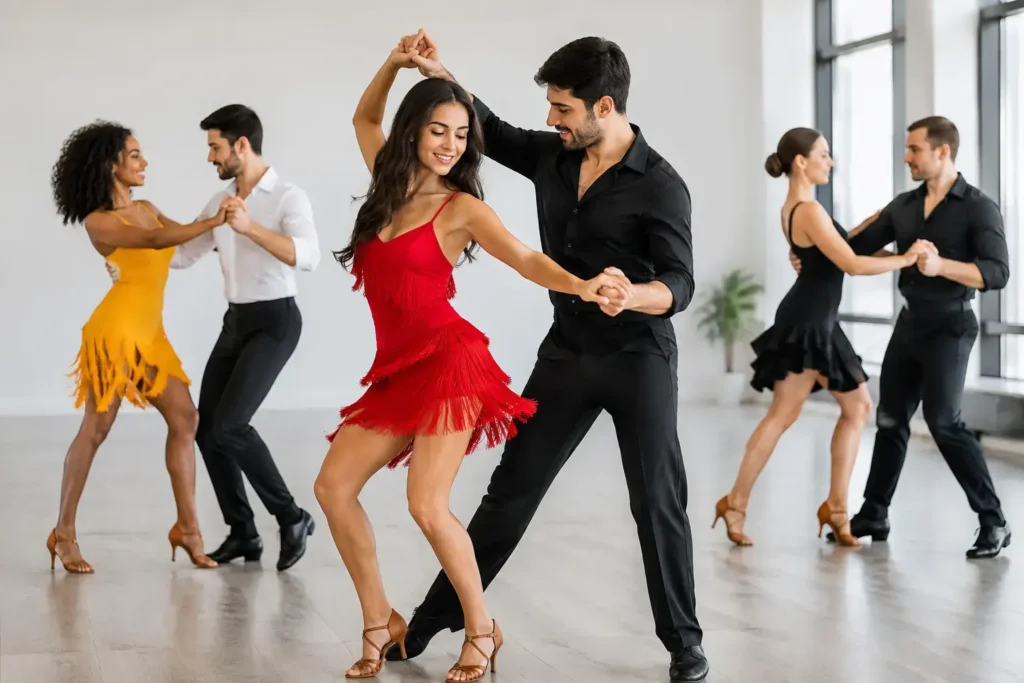
A great song comes on at a wedding, party, or local social night, and suddenly everyone seems to know what to do except you. That feeling is exactly why Latin dance styles explained in plain language can make such a difference. You do not need a partner, prior experience, or perfect rhythm to begin. You just need a style that feels inviting enough to take the first step.
“Latin dance” is a broad label, not one single dance. Some styles are playful and fast, some are romantic and unhurried, and others bring the drama of a ballroom floor. The right choice depends on the music you love, the occasions you want to enjoy, and whether your goal is social confidence, a memorable wedding dance, fitness, or competition.
Latin dance styles explained: start with the feeling
Many people first encounter Latin dances through ballroom lessons, where they are taught with clear patterns, technique, and lead-and-follow skills. At a social dance, you may see the same dances performed more casually, with regional variations and room for personal expression. Both are valuable. Structured instruction gives beginners a reliable foundation; social dancing gives that foundation a fun, real-life purpose.
A good first lesson is not about memorizing a long routine. It is about learning how to move to the beat, connect comfortably with a partner, and recognize the character of each dance. Certified instruction can help you do that step by step, at a pace that feels comfortable.
Salsa: energetic, social, and full of possibilities
Salsa is one of the most recognizable Latin social dances. It is lively, rhythmic, and built around music with a strong percussion pattern. The basic footwork is compact, which makes salsa approachable even when the music feels fast at first.
Salsa is an excellent choice if you want a dance you can use at parties, clubs, vacations, and social events. Once you understand the basic timing and a few turns, it feels wonderfully interactive. Leaders learn to offer clear invitations, while followers learn to respond without guessing what comes next.
There are several salsa styles, including on-one and on-two timing. Beginners do not need to solve that question before their first lesson. Start with one approach, build confidence, and let your instructor guide you toward the timing and styling that best suits your goals.
Bachata: relaxed, romantic, and beginner-friendly
Bachata comes from the Dominican Republic and has become a favorite at Latin dance socials worldwide. Its music often feels melodic and emotional, while the basic step has an easy side-to-side quality. That makes it a comforting entry point for people who worry that they have “two left feet.”
The trade-off is that bachata often uses a closer partner connection than salsa. For some couples, that makes it ideal for a date night or a wedding dance with warmth and personality. For others, a little time building comfort with posture, hand connection, and personal space is helpful. A good instructor keeps the experience respectful, clear, and enjoyable from the beginning.
Cha-cha: playful precision with plenty of personality
Cha-cha is bright, cheeky, and unmistakably rhythmic. You will hear its signature quick-quick-slow timing in the music and feel it in the crisp footwork. It has a compact, playful energy that makes it a standout on the ballroom floor.
Because cha-cha asks for sharper timing and controlled weight changes, it can feel more detailed than bachata in the first few lessons. That is not a reason to avoid it. It is a wonderful choice for dancers who enjoy structure, upbeat music, and adding a little flair to their movement. For wedding couples, cha-cha can also create a fun surprise when the song has the right rhythm.
Rumba: slow, expressive, and connected
Rumba is often called the dance of love, but its real appeal is deeper than a romantic label. It is slow enough to let dancers focus on balance, body movement, and genuine connection with the music. Rather than rushing through patterns, rumba teaches you how to make simple steps look intentional.
This style is especially helpful for beginners who want to feel less awkward dancing with a partner. Its slower pace creates room to understand leading and following, refine your posture, and become more comfortable being seen on the dance floor. Couples preparing for a first dance often enjoy rumba because it can look polished without requiring fast footwork.
Merengue: simple rhythm, instant celebration
If your goal is to get moving quickly, merengue is hard to beat. Originating in the Dominican Republic, it uses a marching-style rhythm that is easy to hear and follow. Partners can begin with simple steps and add turns as their confidence grows.
Merengue is a terrific party dance because it is flexible, friendly, and less intimidating than it looks. It is also a useful confidence builder. Learning that you can stay on the beat, move with another person, and smile through a turn changes the way you approach every other dance afterward.
Samba: buoyant, joyful, and more technical than it appears
Brazilian samba brings a contagious, bouncing energy to the Latin ballroom family. It is lively, athletic, and filled with rhythm. Watching experienced dancers can make samba look effortless, but its distinctive action takes coordination and practice.
That makes samba a rewarding longer-term goal rather than the easiest first social dance for everyone. If you enjoy high-energy music, fitness, and a technical challenge, it can become a favorite. Beginners can still start right away by learning the basic rhythm and movement without trying to copy advanced speed or styling.
Paso Doble: dramatic and performance-driven
Paso Doble draws inspiration from the pageantry of Spanish bullfighting. It is bold, theatrical, and defined by strong shaping, powerful posture, and dramatic music. In ballroom settings, it is often performed as a showcase or competitive dance rather than danced casually at a party.
For dancers drawn to performance, Paso Doble offers a completely different kind of excitement. It develops projection, confidence, and presence. For someone looking for easy social dancing, however, salsa, bachata, merengue, or cha-cha may be more practical places to begin.
How to choose your first Latin dance
Choose with your real life in mind. If you want something you can use at Latin socials, start with salsa or bachata. If you want simple party confidence, merengue is a welcoming option. If you want technique, playful musicality, and ballroom polish, cha-cha or rumba may be the better fit. For a wedding, the song matters as much as the style. A beautiful first dance should match your personalities and feel comfortable enough to enjoy in front of the people you love.
You also do not have to commit to only one style. Learning two dances with contrasting tempos, such as rumba and cha-cha or bachata and salsa, gives you more options whenever music changes. It also improves your overall partnering skills, because each dance teaches timing and connection in a slightly different way.
At Arthur Murray Ottawa Dance Studio, lessons are personalized for singles and couples, so there is no need to arrive with a dance partner or an impressive dance background. Your instructor can help you identify which music and movement feel most natural, then build a plan around the occasions that matter to you.
The best Latin dance is not necessarily the one with the most impressive moves. It is the one that makes you stay for one more song, ask someone to dance, or take your partner’s hand with a little more confidence. Start with that feeling, and let the steps follow.