

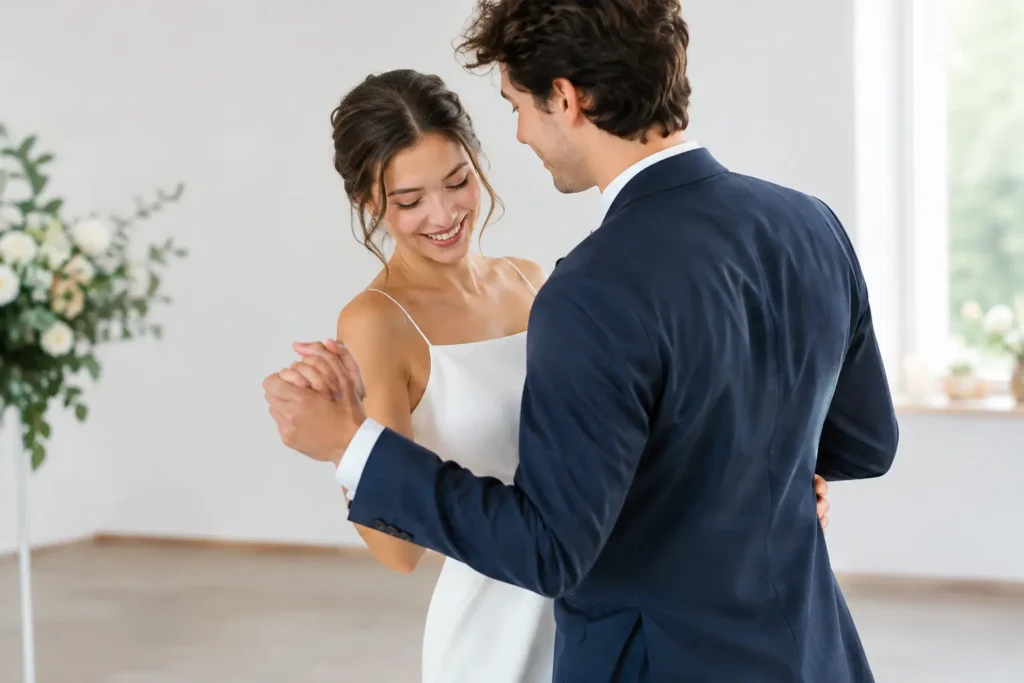
The room gets quiet, the music starts, and suddenly it feels as if every guest is watching. That picture makes many couples postpone planning their first dance. But wedding dances for shy beginners do not need to look like a performance, and they certainly do not need to be complicated. A few comfortable movements, a clear plan, and some time to practice can turn that anxious moment into one of the happiest parts of your celebration.
The goal is not to impress a crowd with difficult choreography. It is to feel connected to your partner, move with the music, and have a moment that looks and feels like you. If that means a simple sway with a polished turn, that is a wonderful first dance.
Why Shy Couples Often Do Better With a Plan
Shyness on the dance floor usually is not about a lack of rhythm. It is about uncertainty. You may be wondering where to put your hands, whether you will forget the next step, or what happens if you make a mistake in front of family and friends. Without a plan, those questions can make even a slow song feel intimidating.
A personalized lesson replaces guesswork with a few reliable choices. You learn how to stand together, how to start moving, and how to recover naturally if a step goes off track. That last skill matters more than perfection. Guests do not notice a small missed step when you stay relaxed, smile at each other, and keep going.
For many shy beginners, learning privately is the most comfortable place to start. There is no need to arrive with dance experience or know the name of a single step. A certified instructor can work at your pace, teach the lead and follow roles clearly, and shape the dance around what feels natural for both of you.
Wedding Dances for Shy Beginners Start Small
The best first dance is one you can repeat calmly, even when your wedding-day nerves are high. Start with a foundation that is easy to remember rather than trying to fill every second of the song with movement.
A simple first dance often has three parts: an easy opening, a few repeated movements in the middle, and a warm ending. You might begin with a basic slow dance hold, travel gently around the floor, add one turn or change of direction, then finish in a close embrace. Repetition is your friend. When a movement returns later in the song, you do not have to learn something new under pressure.
Your instructor can also help you identify a few musical moments worth highlighting. Perhaps the chorus is the right place for a turn, or a lyric gives you a natural moment to pause and look at one another. These small details create a dance with shape and personality without creating a long routine to memorize.
It also helps to choose one person to guide the movement. Traditional lead-and-follow roles are available, but they are not a requirement. The important part is agreeing on clear signals and practicing them together. Couples often feel more confident once they realize they are not both trying to remember every step independently.
Choose a Style That Fits Your Song and Your Comfort Level
A slow song does not automatically require a formal waltz, and an upbeat song does not mean you need fast footwork. The right style depends on your music, your venue, the size of the dance floor, and what makes you feel at ease.
For a romantic ballad, a slow, elegant social dance can create a lovely result with minimal steps. A classic waltz may suit a song with a clear three-count rhythm and give you a graceful way to travel. For contemporary music with a steady beat, a simple swing-inspired or social rhythm can feel relaxed and playful.
There is a trade-off to consider. A more structured dance can look polished quickly, but it may require closer attention to timing. A simple slow dance is easier to learn and more forgiving, though you may want to add a turn or two so it feels intentional rather than like swaying in one spot. A wedding dance consultation can help you hear what your song offers and choose the simplest approach that still feels special.
Do not choose a song only because it is popular. Pick music that means something to you and is comfortable to dance to. If your favorite song changes tempo unexpectedly or has an extremely long introduction, an instructor can help you edit the dance plan around those moments. You can also dance for only part of the song before inviting guests to join you.
Practice for Confidence, Not Perfection
You do not need to rehearse every night for an hour. Short, focused practice sessions are more useful, especially for beginners. Practice the opening several times because it is the moment when you may feel most aware of the audience. Then rehearse your ending, so you know exactly how to finish with confidence.
As the wedding gets closer, practice under conditions that feel a little more real. Wear shoes with a similar heel height or sole to your wedding footwear. Try the dance in a room where you have less space. Practice while a friend watches once or twice, not to judge you, but to help normalize the feeling of being seen.
Your clothes matter, too. A full skirt, fitted suit, long veil, or train can change how freely you move. You do not need to dance in your wedding attire during every lesson, but bring a photo or describe the outfit so your instructor can plan movements that work with it. If you are worried about stepping on a dress, keep the steps compact and avoid complicated spins.
When you make an error, practice your recovery instead of stopping. Keep the frame between you, take a breath, and return to the basic movement. This builds the calm response you will want on the day. The strongest-looking couples are rarely the ones who never miss a step. They are the ones who stay connected when something unexpected happens.
Make the Reception Floor Feel Friendlier
You have more control over the setting than you may think. Ask your DJ or band to introduce the dance warmly and keep the lighting comfortable. If a spotlight feels too intense, discuss softer lighting or a wider wash across the floor. You can also ask your wedding party or immediate family to join near the end of the song, which shifts the focus from a formal presentation to a shared celebration.
Before the music begins, take a second together. Stand close, look at your partner, and let the first few counts pass if you need to. Starting deliberately feels far better than rushing because you think everyone is waiting. They are not counting your steps. They are rooting for you.
At Arthur Murray Ottawa Dance Studio, couples can build a first dance step by step, whether they want a simple, intimate moment or a more polished routine. The process is designed around your song, your schedule, and your comfort level, with no pressure to become a different kind of dancer overnight.
Give Yourselves Permission to Enjoy It
Your first dance is not a test. It is a pause in a busy day when you get to be together, surrounded by people who care about you. Book a wedding dance consultation early enough to enjoy the learning process, then let the goal stay simple: hold each other, hear the music, and celebrate the beginning of your next chapter.