

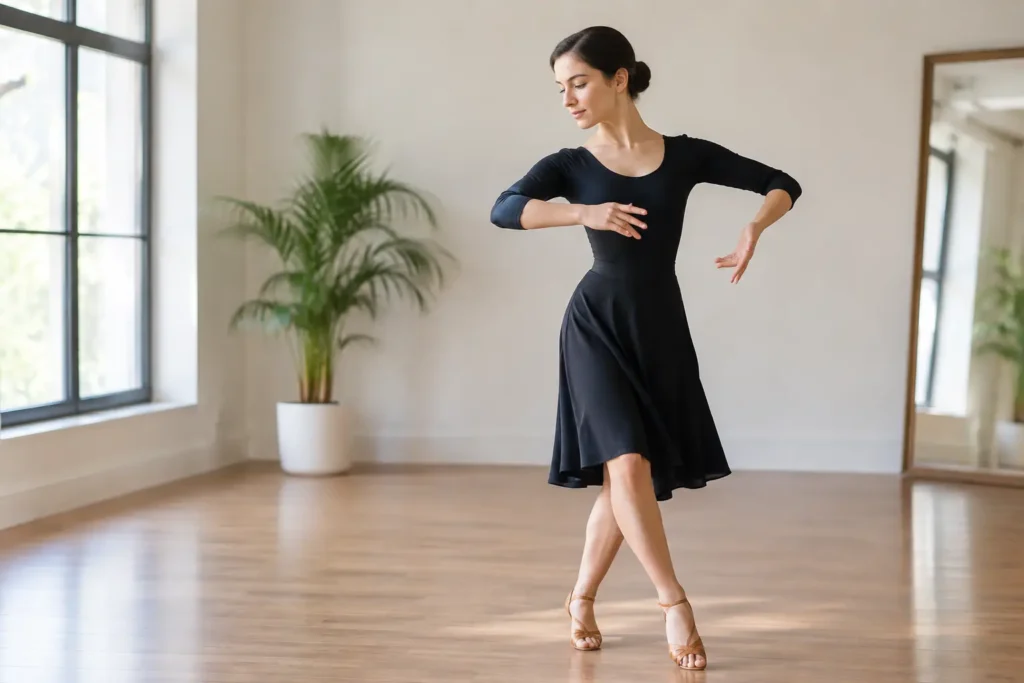
Walking into a dance studio alone can feel like arriving at a party before anyone else. You may wonder where to stand, whether everyone will notice you are new, or how partner dancing can possibly work without a partner. The good news is that you can learn ballroom dancing without a partner – and for many adults, starting solo is the most comfortable, focused way to begin.
Ballroom dance is built on connection, but your progress does not depend on bringing someone through the door. With the right instruction, you can develop rhythm, posture, footwork, confidence, and the ability to dance with different people. You are not waiting for the perfect person to start. You are building a skill that can bring more fun, movement, and connection to your life now.
Why starting solo can be a real advantage
When people picture ballroom dancing, they often picture a couple moving perfectly across a floor. That is a beautiful part of dance, but it is not where every student begins. Before dancing smoothly with another person, you need to feel steady in your own body.
Starting on your own gives you room to focus on the fundamentals without worrying about keeping up with a spouse, friend, or date. You can concentrate on timing, weight changes, posture, and the small details that make a step feel natural instead of memorized. You can ask questions freely, repeat a pattern, and move at a pace that suits you.
It also gives you independence. If you later attend a wedding, a work function, a cruise, or a studio social, you will not need to sit out because the person you came with does not dance. You will know how to step onto the floor, recognize the music, and enjoy the moment.
For some people, coming alone feels less intimidating than learning with a familiar partner. There is no pressure to match someone else’s schedule, skill level, or expectations. Your lessons are about your goals, whether that means feeling comfortable at social events, preparing for a future wedding, staying active, or pursuing a new hobby that challenges you in the best way.
How you learn ballroom dancing without a partner
A qualified instructor makes solo learning practical. In private lessons, your instructor can demonstrate each step, guide your timing, and help you experience the mechanics of a partnered dance in a supportive setting. You may practice independently, dance with your instructor, or work through both roles of a pattern when that helps you understand how the dance fits together.
That last point matters. Learning elements of both the lead and follow does not mean you need to become an expert in both roles right away. It simply helps you become a more adaptable, aware social dancer. You begin to understand where a connection starts, how momentum travels, and why a step works better when it is timed to the music.
A personalized lesson plan is especially helpful for beginners because ballroom dancing includes many styles, each with its own character. A smooth Foxtrot has a different feel from a lively Salsa. Rumba asks for controlled movement and musical expression, while Swing invites energy and playfulness. You do not have to choose your lifelong favorite on day one. Your instructor can introduce styles that fit the music and occasions you care about most.
At Arthur Murray Ottawa Dance Studio, certified instructors teach students step by step, adapting lessons to individual comfort levels and goals. That means you can begin with the basics and build toward the kind of dancing you actually want to do.
What to expect at your first lesson
Your first lesson is not an audition. No one expects you to know the steps, count music perfectly, or arrive in special dance clothes. Wear something comfortable that lets you move, along with shoes that feel secure and allow you to take a few easy turns. Avoid overly grippy athletic shoes if possible, since they can make turning harder on a dance floor.
The lesson usually begins with a conversation about your goals. Maybe you have an upcoming wedding and want to feel ready when the music starts. Maybe you have always loved Latin music but never had the confidence to try it. Perhaps you want a social activity that is more engaging than another evening on the couch. Those answers help shape the experience.
Then comes movement. You will likely start with simple walking actions, weight changes, and basic rhythms before putting them into a recognizable dance pattern. It may feel unfamiliar for the first few minutes. That is normal. Most beginners are not struggling with a lack of talent. They are simply learning a new physical language.
A good instructor will give you clear corrections without making you feel self-conscious. The goal is not perfection. The goal is for the next attempt to feel a little easier, more musical, and more confident than the one before.
Skills that make social dancing feel easier
You do not need a huge catalog of complicated routines to enjoy partner dancing. A handful of dependable skills carries you much further than people expect. Rhythm helps you move with the music rather than chase it. Posture and balance help you feel poised. Basic footwork lets you respond without freezing when a partner invites you onto the floor.
Connection is the skill people often misunderstand. It is not about squeezing someone’s hand or trying to predict every move. It is about clear, comfortable communication through position, timing, and gentle direction. Instructors teach this gradually, with attention to personal space and comfort. You should always feel respected and in control of your own learning experience.
As you progress, you may also work on floorcraft – the ability to navigate a busy dance floor without bumping into other couples. This is especially useful at parties, receptions, and community events, where the dance floor is rarely as open as it looks in a movie.
Group classes and social events add practice, not pressure
Private lessons provide personal attention, while group classes and studio events give you opportunities to apply what you are learning in a relaxed setting. If you come alone, these settings can be a wonderful way to meet people who share your interest in dancing.
You may rotate partners during a group class, which helps you become comfortable adapting to different heights, energy levels, and dance experiences. That can sound intimidating at first, but it is one of the fastest ways to develop confidence. You learn that a good dance is not about finding one perfect partner. It is about using the skills you are developing with kindness, awareness, and a sense of fun.
Social dances are different from lessons. They are a chance to practice familiar steps, enjoy music, and celebrate progress. You do not have to dance every song. You can watch, chat, try one dance, then take a break. The best studios create an environment where beginners are welcomed, experienced dancers are encouraging, and everyone remembers what it felt like to take a first step.
Common worries, answered honestly
“I have two left feet” is usually another way of saying, “I have not been taught how to shift my weight to music yet.” Coordination improves with instruction and repetition. You do not need natural talent to become a capable social dancer.
“I am too old to start” depends more on your mobility and goals than your age. Dance instruction can be adapted for people who want low-impact movement, a gentle pace, or extra attention to balance. Tell your instructor what feels comfortable and what does not. The right program meets you where you are.
“I do not want to dance with strangers” is also a valid concern. You can begin with private instruction and decide later whether group classes or social events appeal to you. There is no need to force yourself into every part of the experience at once.
“I only want to dance when I find a partner” may be true for some people, but waiting has a trade-off. You may miss months or years of enjoying a skill you could begin building now. Starting solo means that when a dance partner does appear – a friend, date, spouse, or fellow student – you will be ready to share the floor.
Give yourself permission to begin
The first goal is not to become the most advanced dancer in the room. It is to walk into a lesson, hear the music, and realize that this is something you can do. Book a trial lesson, wear comfortable shoes, and let the first few steps be exactly what they are: the beginning of a more confident, more connected version of your social life.