

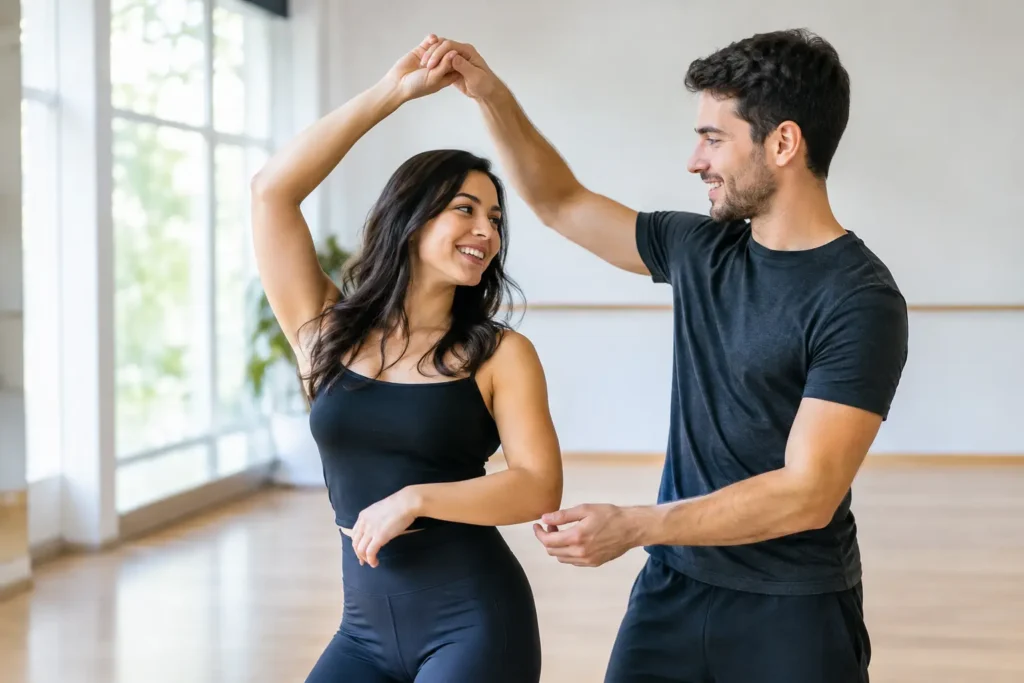
Walking into a dance studio alone can feel like a big step. The good news is that singles dance lessons are designed for exactly that moment: one person, one goal, and a welcoming place to begin. You do not need a partner, a special outfit, or any previous experience. You simply need the willingness to try a few steps.
For many adults, learning to dance starts with a practical reason. Maybe you would like to feel more comfortable at weddings, parties, cruises, or community events. Maybe music has always made you want to move, but you were never sure where to start. Or perhaps you are looking for an active hobby that brings more fun, confidence, and connection into your week.
Why Take Dance Lessons as a Single?
Partner dancing is often misunderstood as something only couples do. In reality, many people begin on their own. A quality studio pairs you with a trained instructor during private instruction, so you can focus on learning without the pressure of trying to teach yourself while keeping up with another beginner.
Starting solo also gives you freedom. You can choose the dances that match your interests, your schedule, and your goals. Someone preparing for a social event may want a few reliable moves in Swing, Salsa, or Cha Cha. Someone who enjoys elegant music may be drawn to Waltz or Foxtrot. If you love high-energy movement, Latin, club, country, and Caribbean styles offer plenty of options.
Dance is a practical social skill, but it offers more than that. It challenges your mind, gets you moving, improves posture and coordination, and gives you a reason to celebrate progress. The first time you lead or follow a pattern to a full song, you feel it immediately: this is something you can actually use.
What Happens in Singles Dance Lessons?
A good first lesson is not an audition. It is a conversation and an introduction to movement. Your instructor will ask what brought you in, whether you have danced before, what kinds of music you enjoy, and where you would like to use your new skills.
From there, instruction should move at your pace. You may begin with simple timing, basic foot placement, and the frame that helps two dancers communicate comfortably. Rather than memorizing a long routine, you build small, useful patterns that can be repeated on a real dance floor.
Private instruction is especially helpful for singles because it gives you focused feedback from the start. You can ask questions, work through a step as many times as needed, and develop habits that make dancing feel natural. There is no need to worry about being behind anyone else.
As your confidence grows, group classes and studio social events can add another valuable layer. They give you opportunities to practice with different people, hear different music, and use what you have learned in a relaxed setting. The mix of private coaching, group learning, and social practice is often where progress becomes exciting.
The Best Dances to Learn First
There is no single right dance for every new student. The best starting point depends on the music you love and the situations you have in mind. Still, a few styles consistently give beginners a strong foundation.
Social dances such as Foxtrot, Waltz, Rumba, Cha Cha, Swing, and Salsa are popular because they appear at many events and work with a wide range of music. Country Western and nightclub styles can also be excellent choices if those are the places and playlists you enjoy most.
Your instructor may recommend starting with two or three dances rather than trying to learn everything at once. That is not a limitation. It is a smart way to build confidence. When you understand rhythm, connection, and a few adaptable patterns, adding another dance becomes much easier.
If your goal is a specific event, let that lead the plan. For example, a wedding guest may benefit from smooth social dances and a little upbeat Swing. A traveler preparing for a cruise may want versatile Latin and ballroom basics. Someone seeking a new passion may prefer a broader program with room to explore styles over time.
Feeling Nervous Is Normal
Almost every beginner has a version of the same thought: “What if I have two left feet?” Certified instructors hear it often, and they know that dancing is learned, not inherited. Coordination develops through clear instruction, repetition, and encouragement.
The first few lessons may feel unfamiliar because your brain is processing music, steps, posture, and timing at once. That feeling passes. With each lesson, you start noticing the beat sooner, remembering patterns more easily, and recovering more comfortably if you miss a step. Even experienced dancers make mistakes. The difference is that they keep moving and enjoy the music.
Wear clothing that allows you to move comfortably and shoes that stay securely on your feet. You do not need dance shoes for your first visit. Avoid overly sticky rubber soles if possible, since they can make turns harder, but comfort matters most at the beginning.
How Singles Meet People Through Dance
It is worth setting realistic expectations here. Dance lessons are not a dating service, and the best reason to start is to learn a skill you will enjoy. But dancing naturally creates a social environment built around shared activity, conversation, and encouragement.
At group classes and practice parties, you meet people who are also trying something new. You may rotate partners, exchange a few laughs over a missed step, and recognize familiar faces week after week. That is a far more comfortable starting point for many adults than trying to force conversation in a crowded room.
The healthiest approach is simple: come to learn, be respectful, and stay open to connection. Some students build friendships, find a regular practice partner, or expand their social circle. Others enjoy having a welcoming place to go, even if their main goal is personal growth. Both are meaningful reasons to dance.
Choosing a Studio That Supports Beginners
The environment matters as much as the dance style. Look for a studio that clearly welcomes singles, offers a low-pressure way to begin, and teaches with a structured plan rather than leaving you to figure it out alone.
Ask how lessons are personalized, whether instructors are trained and certified, and how students practice outside private sessions. A studio with group classes, social events, and a supportive community gives you places to apply your skills as they grow.
At Arthur Murray Ottawa Dance Studio, students have been learning in the region since 1952 through a step-by-step approach built around individual goals. Whether you want to feel at ease at your next event or develop a lasting dance hobby, your program can begin exactly where you are.
Make Your First Lesson About One Goal
You do not have to decide that you will become a dancer for life before taking a first lesson. Give yourself one simple goal instead: learn enough to enjoy the next song, the next party, or the next invitation to dance.
Book a trial lesson, tell your instructor what you want from the experience, and let the first few steps be just that: a fresh, enjoyable start. The dance floor does not ask you to arrive perfect. It only asks you to begin moving.