

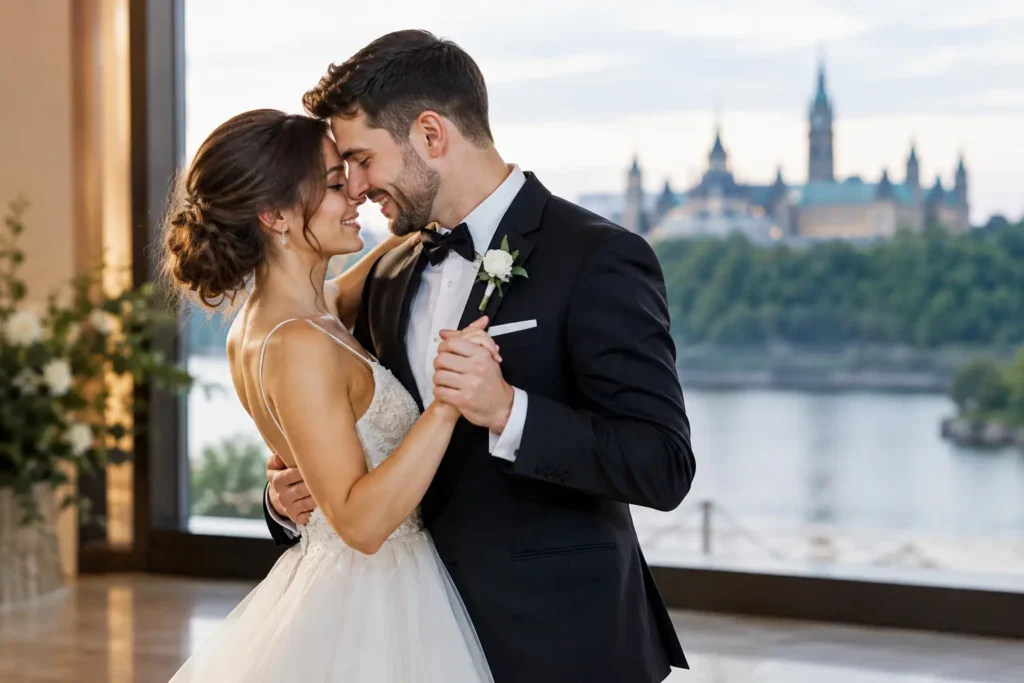
The room gets quiet. Your song begins. For a few minutes, the wedding timeline, seating chart, and last-minute details disappear, and it is simply the two of you on the floor. A wedding first dance Ottawa couples feel good about is not about performing a complicated routine. It is about sharing a moment that looks natural, feels personal, and lets you enjoy the celebration you worked so hard to plan.
That can feel like a tall order if you have never danced together before. The good news is that you do not need natural rhythm, years of lessons, or a dramatic lift to create something memorable. You need a plan that suits your song, your space, your comfort level, and the way you connect as a couple.
Start With the Feeling, Not the Steps
Before choosing a dance style or searching for inspiration, decide how you want your first dance to feel. Do you picture something romantic and unhurried? Lighthearted and a little playful? Classic, polished, and elegant? The answer matters more than whether your dance includes turns or a dip.
A quiet acoustic song may call for a simple slow dance with beautiful movement and close connection. A swing-inspired favorite may invite a few upbeat moments. A song with a strong chorus can be a natural place for a turn, a change of position, or a gentle flourish. When the movement fits the music and your personalities, it never feels like a routine borrowed from someone else.
This is also the time to be honest about your comfort zone. Some couples want a few reliable moves and the confidence to enjoy them. Others want a more choreographed dance with a clear beginning, middle, and ending. Both choices can be wonderful. The best first dance is the one you will actually look forward to dancing.
Choose a Song You Can Move To
The song is emotional, but it is practical too. A song you love can still be challenging if the tempo changes constantly, the phrasing is unpredictable, or it runs for five minutes. That does not mean you have to give it up. It simply means your dance plan should work with it.
Listen together and notice the beat. Can you both hear a steady pulse? Does the song have a clear moment where it begins to build? Is there a lyric or instrumental section that would make a natural finish? Even a simple dance becomes more expressive when you know where the music is taking you.
Most couples do not need to dance for the entire recording. Two to three minutes is often plenty of time to create a meaningful moment while keeping guests engaged. You can ask your DJ or band to fade the music at a planned point, or choose an edited version that preserves the sections you love most.
If you are deciding between two songs, try walking slowly together to each one. The song that makes you relax, smile, and move at the same pace is often the better choice. Your first dance should support you, not ask you to fight the music.
Build a Dance That Works in a Real Wedding Venue
A wedding floor is not always a wide-open ballroom. Tables, cameras, guests, low lighting, a full skirt, formal shoes, and a long train can all change what feels comfortable. Planning for the real conditions of your day is one of the most useful parts of preparing your first dance.
Talk through the size and shape of the dance floor early. A small floor does not limit you to swaying in place. It simply favors compact patterns, gentle turns, and movement that stays connected. A larger space gives you room to travel, but it does not require you to fill every corner.
Your attire deserves consideration as well. Practice at least once in shoes with a similar heel height and sole to what you will wear. If a dress is fitted, heavy, or has a train, make sure your movements allow you to step comfortably. A jacket, tuxedo shoes, or a long veil can also affect posture and range of motion. Small adjustments before the wedding are far better than surprises during it.
Keep the spotlight on connection
Guests rarely remember whether every foot landed perfectly on the beat. They remember the look you gave each other when the music started, the laughter after a tiny mistake, and the feeling in the room. Good technique helps you feel secure, but connection is what makes the moment yours.
Choose movement that lets you look at one another. Include a few pauses so you can breathe and enjoy the song. If you add a turn, finish it in a position that feels stable and familiar. These details create a polished appearance without making the dance feel stiff or over-rehearsed.
Give Yourselves Enough Time
The ideal timeline depends on your goals. Couples who want a comfortable foundation and a few simple signature moments may be ready with several weeks of focused practice. A fully choreographed dance, a fast song, or a dance involving a wedding party usually benefits from more time.
Starting early gives you options. It lets you learn at a relaxed pace, make changes if the song does not work as expected, and practice without turning another wedding task into a source of pressure. It also gives the dance time to feel familiar in your body, which is what creates confidence on the day.
If your wedding is close, do not assume it is too late. A short preparation window can still produce a beautiful result when the plan is realistic. Focus on a comfortable basic step, timing, how to enter and exit the floor, and one or two moments that feel special. Simple and confident will always look better than ambitious and uncertain.
Practice for Calm, Not Perfection
Practice does not need to mean running the entire dance over and over until it loses its joy. Short, intentional sessions are often more effective. Spend a few minutes reviewing one transition, then put the music on and dance it through once with the goal of staying relaxed.
Practice in different conditions when possible. Try dancing after a long workday, in lower light, or with a little extra noise around you. These are closer to the conditions of a wedding reception than a quiet living room. You will learn that you can keep going even when the moment is not perfectly controlled.
A helpful rule is to keep moving if something goes wrong. If you miss a step, return to your basic movement, reconnect, and smile. Your guests will see a couple enjoying each other, not a checklist of choreography. Often, the unplanned moments become the most genuine ones.
Let an instructor shape the dance around you
Private instruction can make the process less intimidating because you are not trying to translate a video made for someone else. A certified instructor can help you identify a dance style that fits your music, adapt movement for your height difference or attire, and create an approach that matches your experience level.
At Arthur Murray Ottawa Dance Studio, wedding dance lessons are built step by step, so beginners can feel supported from the first lesson. You can come in with a finished song, a short list of possibilities, or simply an idea of the feeling you want to create. The goal is not to turn you into professional performers. It is to help you walk onto the floor knowing what to do and enjoying the person beside you.
A First Dance Is a Beginning
Your wedding first dance does not have to be the only time you dance together. Learning a few skills before the wedding can make future celebrations more fun too, from a friend’s reception to an anniversary dinner or a night out with live music. That is a lovely bonus, but it starts with one simple decision: make room to enjoy this moment together before the big day arrives.
Book time to practice, choose a song that feels like home, and give yourselves permission to keep it joyful. When the music begins, the goal is not to impress the room. It is to celebrate the life you are about to share.